
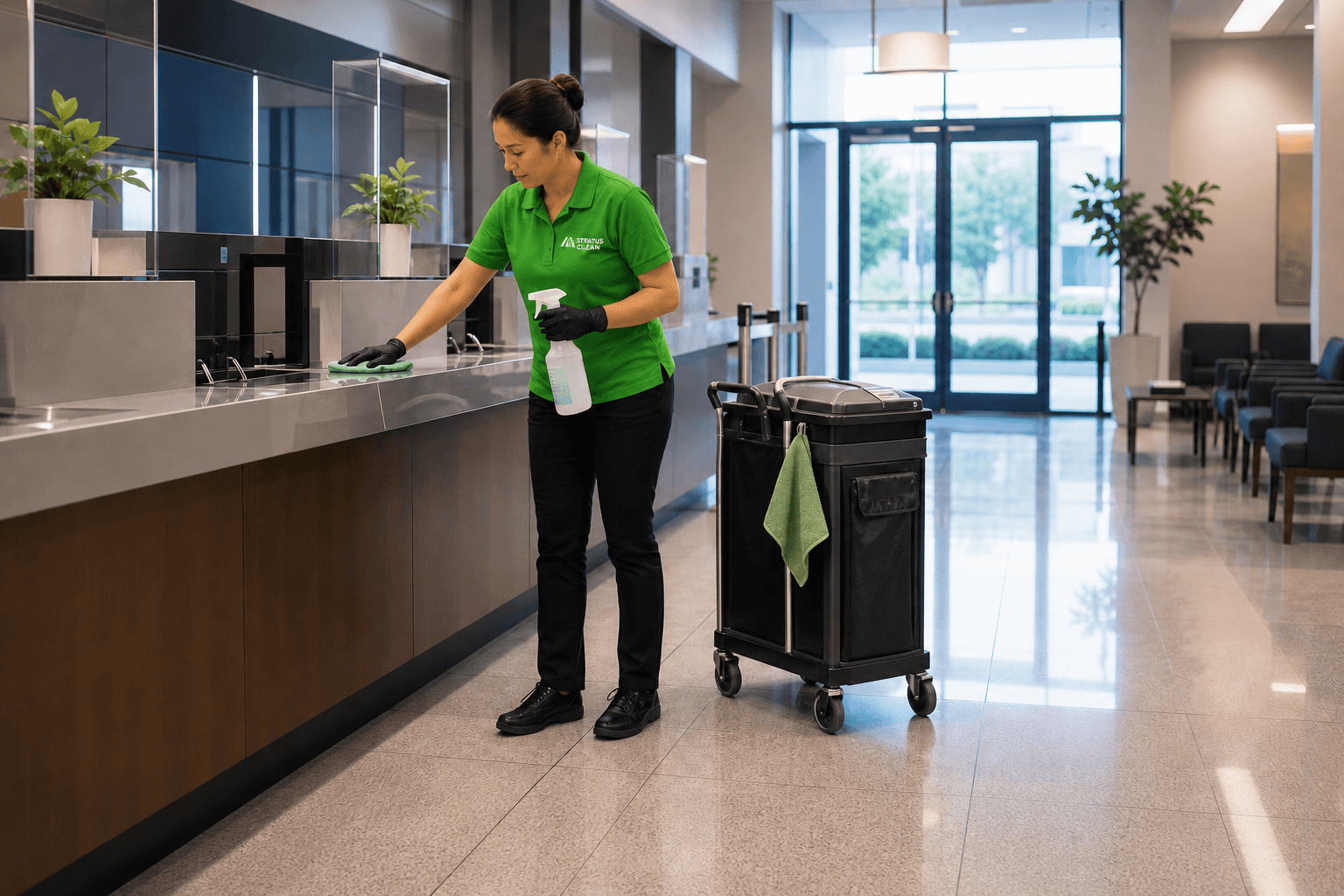
Banks and financial offices need cleaning programs that support trust, security, and presentation. Customers may visit a branch to make deposits, meet with advisors, open accounts, or resolve sensitive financial questions. The building should feel orderly from the entrance to the teller line to the private office.
Bank cleaning also requires careful planning around secure areas, after-hours access, alarm procedures, privacy expectations, and staff workflows. A generic cleaning checklist is rarely enough.
Lobbies are high-value impression areas
The lobby is the first signal customers receive. Floors, glass, waiting chairs, counters, teller-line areas, brochures, restrooms, and entrance doors all affect how professional the branch feels. Dust, streaks, fingerprints, and floor wear can make a financial institution feel less attentive.
A bank cleaning plan should prioritize the customer journey. Entry glass and doors may need frequent attention. Floors should be kept free from tracked-in soil. Waiting areas should be reset. Restrooms should be clean, stocked, and checked consistently.
Secure access must be part of the scope
Cleaning a bank or financial office often involves access rules that are stricter than those in a typical office. The scope should define entry times, alarm procedures, keys, escorts, restricted rooms, teller areas, vault-adjacent areas, private offices, document security, and where cleaning staff may or may not go.
Clear access rules help the cleaning team work confidently while protecting the institution's security expectations. They also reduce confusion when branch hours, holidays, or special events change.
Teller areas and private offices need careful detail
Teller counters, customer writing surfaces, consultation tables, office desks, chair arms, door handles, and shared touchpoints should be included where appropriate. Cleaning teams should know how to work around sensitive papers, equipment, personal items, and locked areas.
For private offices, the scope may include trash removal, vacuuming, dusting cleared surfaces, touchpoint cleaning, and floor care. The provider should not disturb documents or personal work unless the policy specifically allows it.
Floors and glass shape the branch experience
Financial offices often use polished floors, carpet, tile, glass partitions, and large entry windows. These surfaces can show wear quickly. A recurring janitorial program should include routine floor cleaning and spot attention, while periodic specialty work may include carpet cleaning, hard floor care, buffing, window cleaning, and pressure washing at exterior entrances.
Rainy days and high traffic can make entrance areas look tired before the day is over. Some branches benefit from day porter service or scheduled daytime checks.
Bank cleaning checklist
A practical bank cleaning checklist may include:
- Entry doors, lobby glass, and customer touchpoints
- Lobby floors, seating, and side tables
- Teller-line surfaces within approved scope
- Private office trash, floors, and cleared-surface dusting
- Conference room resets
- Restroom cleaning and restocking
- Breakroom cleaning
- ATM surrounds and exterior touchpoints where approved
- Carpet care, hard floor care, and window cleaning
- Secure access instructions and restricted areas
The checklist should be reviewed with branch leadership before service begins.
Local support for banks and financial offices
Stratus Clean Palm Beach can help banks, credit unions, investment offices, insurance offices, mortgage offices, and financial service firms build cleaning programs around branch hours, security procedures, customer-facing spaces, and specialty cleaning. Local service coverage makes it easier to schedule walkthroughs, handle changes, and support multiple nearby branches.
How often should bank cleaning happen?
Most active branches need recurring cleaning several days per week, and many benefit from daily service. Restrooms, teller-line customer areas, lobby floors, entry glass, and trash should be reviewed based on traffic. Private offices and conference rooms may need a different rhythm depending on appointment volume. Specialty services such as carpet cleaning, floor buffing, window cleaning, and pressure washing can be scheduled monthly, quarterly, seasonally, or before branch events.
The right frequency should reduce staff interruptions. If branch employees are regularly cleaning restrooms, wiping lobby areas, or apologizing for floors, the cleaning scope is probably too light. A better plan gives the branch a consistent baseline while still respecting security, access, and customer privacy.