Professional dental office cleaning services for Palm Beach County practices. Customized cleaning programs for operatories, sterilization areas, waiting rooms, and restrooms with after-hours scheduling around patient care.
What Gets Cleaned in Dental Office Cleaning Services
Dental office cleaning services focus on patient-facing areas, support spaces, and administrative zones while maintaining clear boundaries with clinical responsibilities. Understanding what is cleaned, how scheduling works, and what a walkthrough covers helps dental practices select the right program.
Scope and planning details:
- Waiting Rooms & Reception: Daily cleaning of seating, reception counters, floors, interior glass, and patient restrooms for a polished first impression
- Operatory Cleaning: Floors, baseboards, cabinetry, countertops, door glass, and light switches cleaned after patient hours without touching clinical equipment or instruments
- Sterilization Area Support: Floors, corridors, and adjacent restrooms maintained while respecting the clinical team's instrument processing and infection control zones
- Restrooms: Patient and staff restrooms cleaned and restocked per the agreed schedule with attention to fixtures, mirrors, floors, and touchpoints
- Administrative & Staff Areas: Offices, breakrooms, hallways, and back-of-house spaces kept organized with trash removal, surface wiping, and floor maintenance
Operatory Cleaning for Dental Practices
Operatory cleaning in dental offices covers floors, cabinetry exteriors, counters, interior windows, doors, and high-touch surfaces. The cleaning team does not handle dental chairs, instruments, trays, lights, or any equipment involved in patient treatment. Clinical staff retain responsibility for chair-side disinfection and between-patient procedures. This separation is defined during the walkthrough: the practice approves which surfaces are included, what is off-limits, and how the cleaning team should navigate treatment rooms. Multi-doctor practices often request operatory cleaning 2-3 times per week with nightly service for waiting areas and restrooms.
Sterilization Area and Treatment Support Zones
Cleaning services support sterilization areas by maintaining floors, door glass, and adjacent corridors while leaving instrument processing zones untouched. The practice's clinical team manages autoclaves, ultrasonic cleaners, instrument trays, and all infection control protocols. The commercial cleaning scope addresses surrounding restrooms, hallways, and consultation rooms. Practices should walk the cleaning team through restricted zones, where supply carts live, and which doors must remain closed or unlocked. This clarity prevents confusion and keeps the program aligned with the practice's workflow.
After-Hours Scheduling Around Patient Care
Most dental office cleaning programs run after the last patient appointment of the day, typically in the evening or overnight. The practice provides access instructions, alarm details, and confirmation that staff have left. Service frequency ranges from 2 evenings per week for small single-doctor practices to 5 nights per week for high-volume multi-doctor locations. The cleaning team follows a checklist for each visit, completes the work within the agreed window, and secures the office before leaving. Any access issues, areas needing attention, or missed tasks are reported to the practice contact before the next patient day.
What a Dental Office Cleaning Walkthrough Includes
A cleaning walkthrough starts with a tour of all areas to be serviced: reception, waiting room, operatories, sterilization corridor, patient and staff restrooms, consultation rooms, administrative offices, and breakrooms. The practice points out surfaces or equipment the cleaning team must not touch, notes the last appointment time, and explains access and alarm procedures. The provider asks about current pain points (restroom presentation, waiting room consistency, floor condition), supply responsibilities (who provides paper products and trash liners), and frequency preferences. This information becomes the scope document and task checklist used to build an accurate quote and prevent misunderstandings after service starts.
What a Dental Office Cleaning Quote Should Cover
A detailed dental office cleaning quote lists the service frequency (such as 3 evenings per week), room-by-room checklist, periodic tasks (carpet cleaning, floor care), supply responsibilities, monthly rate, and quality control procedures. It should specify who handles trash from clinical waste containers versus general office refuse. The quote clarifies how issues are reported, who inspects completed work, and how the practice can request changes or add-on services. Comparing quotes becomes easier when each provider receives the same room list, square footage, and scope details. This ensures pricing reflects equivalent service levels and task responsibilities.
Cleaning Programs for Multi-Doctor and Specialty Practices
Larger dental practices with multiple doctors, extended hours, or specialty services (endodontics, periodontics, oral surgery) can structure cleaning programs to match their schedule. Some prefer nightly service for high-traffic patient areas with operatory cleaning 2-3 times per week. Others schedule deep cleaning on evenings when certain treatment rooms are closed. Specialty practices may request extra attention to consultation rooms where case presentations occur. The program adjusts to the number of operatories, patient volume, Saturday appointments, and the practice's workflow preferences.
Carpet Cleaning for Dental Office Reception and Administrative Areas
Carpet cleaning in dental offices addresses waiting rooms, reception areas, and administrative offices where commercial carpet is installed. Hot-water extraction cleaning removes soil, tracked-in dirt, and visible staining that accumulates from daily patient traffic. Cleaning frequency should be based on observable factors: how quickly soil reappears after cleaning, whether patients comment on appearance, how much dirt gets tracked into the facility, and the practice's presentation standards. Waiting rooms with constant patient flow may need more frequent service than back-office administrative areas. Schedule carpet cleaning when the practice can close long enough for extraction equipment access, drying time, and proper ventilation before reopening. Carpet cleaning scope covers non-clinical areas only: reception, waiting rooms, and administrative offices. Treatment rooms, sterilization zones, and clinical spaces are excluded. The practice's clinical team retains responsibility for all sterilization protocols, instrument processing, and infection control procedures. For recurring carpet maintenance planning, see the commercial carpet cleaning service page.
Reference: Commercial Carpet Cleaning Services
Professional Teams for Patient-Facing Practices
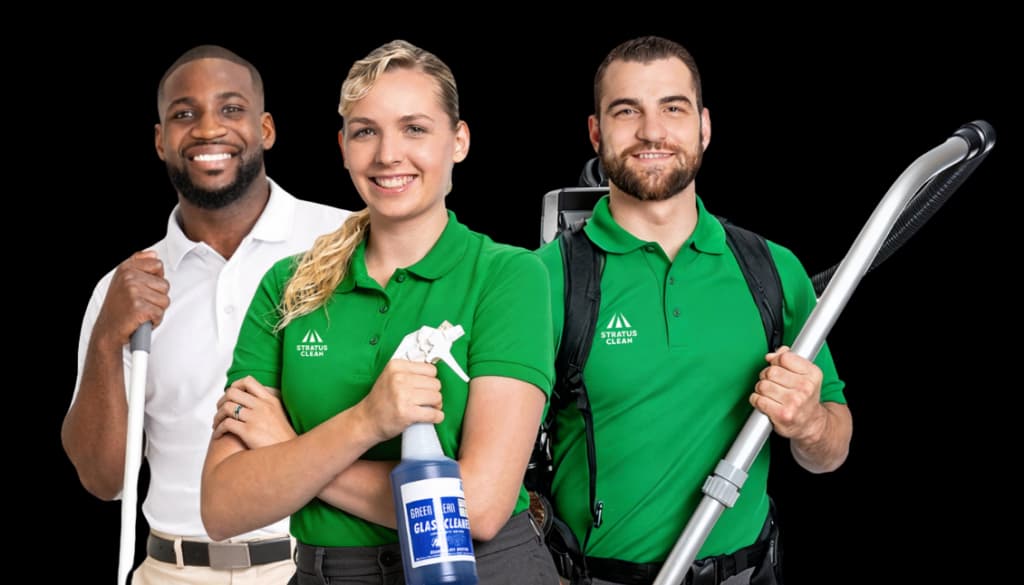
Stratus franchisees operate with professionalism and accountability. Background checks, proper vetting, and identifiable uniforms help staff and patients feel confident in who is maintaining the office. Teams are trained to respect clinical boundaries, follow access protocols, and communicate clearly when questions arise.
Consistent, High-Quality Results
A detailed 50-point, 5-star evaluation system and routine quality checks help dental practices consistently meet expectations, with prompt follow-through on any area needing attention. This accountability ensures waiting rooms, restrooms, and operatory support spaces are ready for each patient day.
Clear Boundaries for Clinical Responsibility
Commercial janitorial service should support the facility without replacing clinical sterilization, instrument processing, regulated waste handling, infection control programs, or dental protocols managed by the practice.
Attention to Every Detail
Floors, reception areas, waiting room chairs, interior glass, counters, hallways, and approved treatment-adjacent spaces receive detail-focused cleaning that shapes patient perception and daily office operations.
High-Touch Area Focus
Reception desks, waiting areas, restrooms, door hardware, light switches, consultation rooms, and shared support spaces see continuous use and are prioritized so the office remains maintained and ready throughout the day.
A Better Patient Experience
Cleaning processes reduce dirt, dust, odors, and everyday buildup while supporting indoor comfort for patients, visitors, and staff.
Stratus Green Clean Comes Standard
Environmentally responsible practices support a cleaner facility while being mindful of patients, staff, and visitors at no additional cost.
Professionalism and Reliability
Dental offices need dependable partners who respect timing and environment. Responsive, detail-oriented teams maintain the facility without disruption.
Fully Insured
Stratus Building Solutions franchisees and their teams carry Workers' Compensation, Liability, and Bond insurance for confidence and protection across the practice.
Local Dental for Commercial Facilities
Stratus Clean confirms local coverage, reviews how the building operates, and defines a practical commercial cleaning scope before service begins. We support facilities across Palm Beach County, the Treasure Coast, the Space Coast, and nearby Florida markets.
Planning Guides and Related Services
Use these resources to prepare a walkthrough, compare service scopes, and plan the next step for your facility.
Dental Office Cleaning in West Palm Beach
Dental office cleaning services for downtown, Northwood, and Dixie Highway dental practices.
Boca Raton Dental Office Cleaning
Cleaning programs for Boca Raton dental offices and specialty practices.
Dental Cleaning in Palm Beach Gardens
Professional cleaning for Palm Beach Gardens dental practices.
Healthcare Cleaning Services
Medical and dental facility cleaning programs for Palm Beach County.
Commercial Window Washing
Interior and exterior glass cleaning for dental office presentation.
Commercial Carpet Cleaning
Hot-water extraction carpet cleaning for waiting rooms, reception, and administrative areas.
Dental FAQ
What areas are included in dental office cleaning services?
Dental office cleaning services typically include reception areas, waiting rooms, patient restrooms, consultation rooms, administrative offices, breakrooms, hallways, and treatment-adjacent surfaces. Operatory cleaning focuses on floors, counters, cabinetry, interior windows, and doors while respecting the boundary between commercial cleaning and clinical responsibilities. Sterilization area cleaning addresses floors, door glass, and restroom facilities in the support corridor. The dental practice defines which surfaces and rooms are included and which equipment or areas the cleaning team must not touch.
How does after-hours scheduling work for dental office cleaning?
Most dental office cleaning programs run after the last patient appointment of the day. The practice provides access instructions, alarm codes or key arrangements, and the time when staff have left. Service is typically performed 2-5 evenings per week depending on patient volume and facility size. The cleaning team follows the agreed service window, completes a checklist for each visit, and secures the office according to the practice's procedures before leaving. Any access issues or areas needing attention are reported to the practice contact before the next patient day.
What should a dental practice prepare for a cleaning walkthrough?
Prepare a room list with square footage, number of operatories, patient restrooms, and staff areas. Note the last appointment time, patient volume per week, and access procedures. Identify surfaces or equipment that are off-limits to the cleaning team. List current pain points such as restroom presentation, waiting room consistency, or floor appearance. Define who replenishes restroom supplies and handles trash from clinical waste versus general refuse. Providers use this information to build a detailed scope and quote that matches the practice's actual needs.
How do dental office cleaning services handle operatory cleaning?
Dental office cleaning services focus on non-clinical surfaces in operatories: floors, baseboards, cabinetry exteriors, countertops, interior windows, doors, and light switches. Cleaning teams do not touch dental equipment, instruments, trays, or any surface involved in patient treatment or sterilization. The practice's clinical team remains responsible for chair-side disinfection, instrument processing, and all infection control procedures. This boundary is established during the walkthrough so the cleaning scope supports the practice without overlapping clinical protocols.
What does a dental office cleaning quote include?
A dental office cleaning quote specifies the service frequency (such as 3 evenings per week), room list, task checklist per visit, periodic deep cleaning items (carpet extraction, floor stripping), supply responsibilities, and the monthly rate. It should clarify whether restroom paper products and trash liners are provided by the practice or the cleaning service. The quote also defines quality control procedures, communication protocols, and how missed tasks or issues are resolved. Compare quotes using the same scope details so pricing reflects equivalent service levels.
Can dental office cleaning services accommodate multi-doctor group practices?
Yes. Larger dental practices with multiple doctors, extended operating hours, or Saturday appointments can structure cleaning programs to match their schedule. Some practices prefer nightly service for high-traffic waiting rooms and restrooms, with operatory and administrative area cleaning 2-3 times per week. Others schedule deep operatory cleaning on evenings when certain treatment rooms are closed. The program adjusts to the number of operatories, patient volume, and staff schedules for each practice location.
How often should dental office carpets be cleaned?
Dental office carpet cleaning frequency depends on visible soil accumulation, foot traffic patterns, manufacturer care requirements, drying time availability, and practice presentation needs. Waiting room and reception carpets with constant patient traffic may need more frequent cleaning than administrative office areas. Observe how quickly soil appears after cleaning, whether tracked dirt increases, and whether the carpet appearance affects patient perception. Schedule carpet cleaning when the practice can be closed long enough for extraction, drying, and ventilation. Carpet cleaning scope covers non-clinical areas only: reception, waiting rooms, and administrative offices. Treatment areas, sterilization zones, and clinical spaces are excluded.