
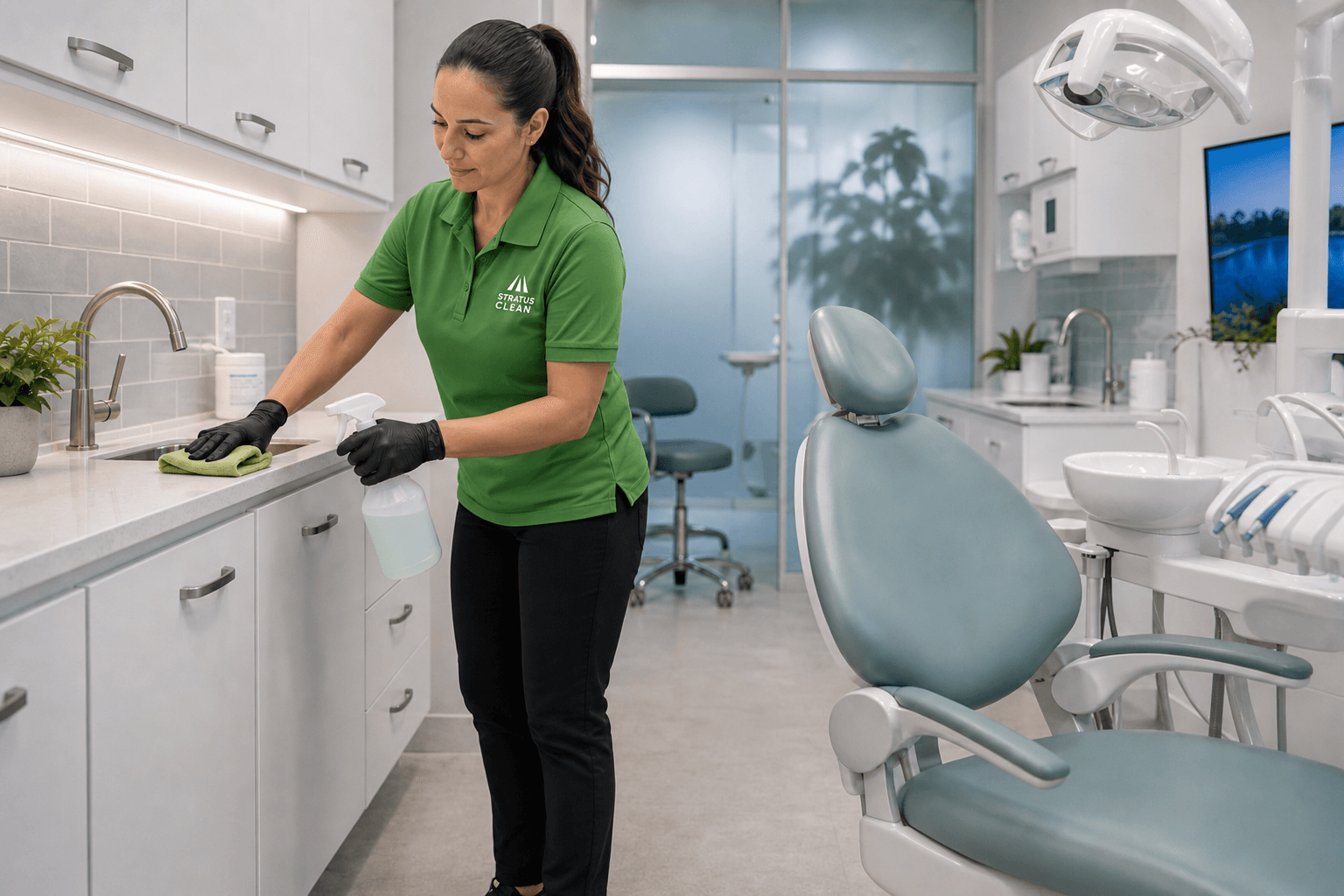
Dental offices depend on trust. Patients notice the waiting room, restroom, reception counter, hallway floors, and treatment room surroundings before they sit in the chair. A cleaner, more organized facility can support confidence and reduce the small distractions that make patients question the practice experience.
Dental office and dental center cleaning should be carefully scoped. Commercial janitorial service does not replace clinical sterilization, instrument processing, infection control procedures, or regulated dental protocols. It can, however, support the non-clinical and agreed clinical-adjacent areas that shape patient comfort and staff workflow.
Define the difference between janitorial and clinical responsibilities
Every dental office should clearly define what the cleaning team handles and what remains with clinical staff. The janitorial scope may include waiting rooms, reception areas, restrooms, breakrooms, offices, floors, trash, touchpoints, and certain treatment room support surfaces if approved by the practice. Clinical sterilization, dental instruments, regulated waste, and specialized treatment protocols should remain under the practice's policies and trained personnel.
This clarity protects the practice and helps the cleaning team perform the right work consistently.
Patient-facing areas create the first impression
The waiting room is often where patients decide whether the office feels organized and professional. Chairs, side tables, floors, counters, door handles, entry glass, restrooms, and check-in areas should look ready throughout the day. Even small issues such as dust, fingerprints, visible trash, or restroom odors can affect the patient experience.
Recurring cleaning keeps these areas from becoming a source of staff frustration. It also helps the front desk focus on patients instead of facility touch-ups.
Restrooms need detail and consistency
Dental office restrooms may be used by patients, family members, staff, delivery drivers, and vendors. A cleaning plan should include toilets, sinks, counters, mirrors, fixtures, partitions, dispensers, trash, floors, and supply checks. High-touch surfaces such as door handles, faucets, flush handles, and light switches should be named in the scope.
If the office has heavy appointment volume, day porter service or midday restroom checks may be useful.
Floors affect how clean the whole office feels
Dental offices often have a mix of hard floors, carpet, mats, and treatment-area surfaces. Floor care should reflect each surface type and traffic pattern. Waiting rooms and hallways may collect soil from patients and visitors. Treatment corridors may need frequent dust and debris control. Staff areas may need a different frequency than patient-facing spaces.
Periodic carpet cleaning, hard floor care, and detail cleaning around edges can help prevent the space from looking worn.
High-touch areas to include in the scope
A practical dental office cleaning checklist may include:
- Reception counters and check-in surfaces
- Door handles, push plates, and light switches
- Waiting room chairs and side tables
- Restroom fixtures and dispensers
- Hallway touchpoints
- Breakroom counters, sinks, tables, and appliance exteriors
- Office trash and floors
- Interior glass and entry doors
- Treatment room support surfaces only where approved by the practice
The practice should review the list and confirm which areas require special instructions.
Why local availability matters for dental offices
Dental practices need a cleaning team that can work around appointment hours, respect access procedures, and respond when the schedule changes. Local support matters when the office has evening procedures, early appointments, staff training days, or a renovation.
Stratus Clean Palm Beach can help dental offices and dental centers define cleaning frequency, priority rooms, high-touch areas, floor care, restroom detail, and specialty cleaning needs. Review the dental office cleaning service page, then use the service area directory to confirm local coverage.
Build the cleaning plan around appointment flow
Appointment flow should guide the schedule. A practice with early patients may need after-hours cleaning that leaves reception, restrooms, and hallways ready before the first check-in. A practice with evening appointments may need a later service window. A dental office with heavy family traffic may need restroom and waiting room attention more often than a smaller specialty practice.
The walkthrough should identify patient arrival paths, consultation rooms, staff entrances, sterilization-adjacent areas, breakrooms, and floor surfaces. When the plan reflects real movement through the office, cleaning supports both patient confidence and staff efficiency.