
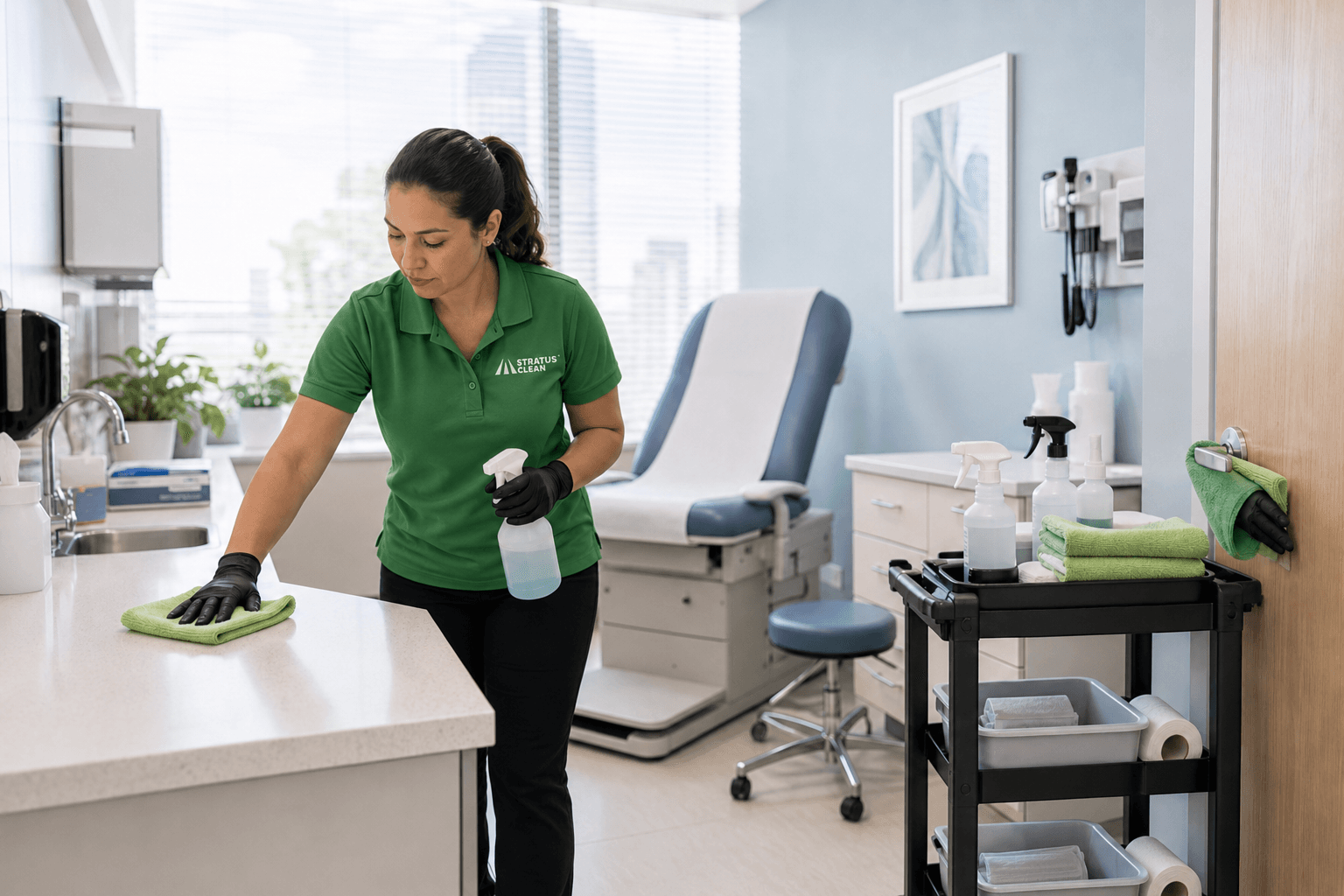
Medical office cleaning requires more structure than standard office cleaning. Patients, staff, and visitors move through waiting rooms, exam rooms, restrooms, labs, and administrative areas throughout the day. Each space has different expectations for appearance, touchpoint care, and cleaning frequency.
For Palm Beach healthcare facilities, a professional cleaning plan should support daily operations while respecting patient experience and provider workflow.
Patient-facing areas set the tone
Waiting rooms, reception desks, check-in counters, and restrooms shape the first impression of a healthcare facility. These spaces need consistent cleaning because they receive frequent traffic and are highly visible.
A cleaning plan should address seating areas, counters, doors, interior glass, floors, and shared touchpoints. If the facility is busy during the day, day porter support may help maintain the space between after-hours cleaning visits.
Exam rooms and clinical spaces need clear scope
Medical offices should define which areas are included, what supplies are used, and how cleaning fits around appointments. The cleaning scope may include floors, counters, sinks, trash removal, restroom care, and non-clinical support areas.
For specialized spaces such as dental offices, dialysis centers, infusion centers, cardiology practices, veterinary offices, or outpatient centers, the cleaning provider should understand the difference between general commercial cleaning and clinical responsibilities handled by medical staff.
High-touch cleaning matters in healthcare settings
Healthcare environments include many shared touchpoints: door handles, light switches, chair arms, faucets, counters, check-in surfaces, and restroom fixtures. A strong medical office cleaning plan identifies these areas and sets a repeatable cleaning rhythm.
This does not replace clinical protocols, but it helps keep the facility cleaner, more organized, and more comfortable for patients and staff.
Floors and restrooms need predictable maintenance
Floors in medical offices deal with daily foot traffic, carts, weather, and waiting-room activity. Restrooms may need special attention because they are used by patients, visitors, and staff.
Recurring floor care, restroom cleaning, and supply checks can reduce daily friction for the office team.
Choose a provider with commercial healthcare experience
Stratus Clean Palm Beach supports medical offices, medical facilities, dental offices, outpatient centers, dialysis centers, infusion centers, and other healthcare-adjacent facilities. A facility-specific quote can define service windows, cleaning frequency, high-priority areas, and specialty services so your team knows exactly what to expect.
Medical cleaning starts with clearly defined spaces
Healthcare-adjacent facilities should not rely on vague cleaning language. The scope should define waiting rooms, reception desks, exam rooms, staff areas, restrooms, corridors, floors, touchpoints, trash handling, and any areas that are outside the janitorial team's responsibility. This protects patient-facing standards while respecting clinical protocols and facility policies.
Commercial medical office cleaning is not a substitute for clinical sterilization, infection control programs, or regulated medical procedures. It can support a cleaner, more organized environment by keeping non-clinical and agreed clinical-adjacent areas maintained according to the scope.
Patient perception matters before the appointment starts
Patients notice the waiting room before they notice anything else. Floors, chairs, counters, entry glass, restrooms, and reception surfaces all shape confidence. A dusty lobby or neglected restroom can make a practice feel less organized even if the clinical team is excellent.
Routine cleaning helps keep the patient journey more consistent. It also supports front desk staff by reducing the number of appearance issues they have to manage during busy appointment blocks.
High-touch priorities for healthcare offices
High-touch surfaces should be clearly named in the scope. Common priorities include door handles, chair arms, counters, light switches, restroom fixtures, faucets, elevator buttons, check-in surfaces, exam room touchpoints within scope, and staff breakroom surfaces. The cleaning plan should also identify the products used and the expected frequency.
If a facility needs disinfecting services, the scope should define the surfaces, products, dwell times, safety requirements, and schedule. Precision matters more than broad claims.
Floors, restrooms, and supply points need consistency
Medical offices often have frequent restroom use, rolling carts, patient traffic, and flooring that shows dust quickly. A predictable floor and restroom routine reduces distractions for staff and improves patient-facing appearance. Supply checks can also be part of the plan so paper goods, liners, and soap do not become daily interruptions.
Periodic floor care may be useful for tile, vinyl, polished floors, and carpeted areas. Waiting rooms and corridors often need a different frequency than private offices or low-traffic staff spaces.
What to ask before hiring a medical office cleaning company
Ask whether the provider can support after-hours access, privacy expectations, secure areas, staff communication, product requirements, touchpoint cleaning, restroom detail, and specialty services. Ask how issues are reported and whether the provider can adapt if patient volume changes.
Stratus Clean Palm Beach can help medical and healthcare-adjacent facilities across the region build a practical cleaning scope around the building's real use. Review medical office cleaning in West Palm Beach, the core medical facility cleaning service, or dialysis center cleaning guidance based on the facility type.