
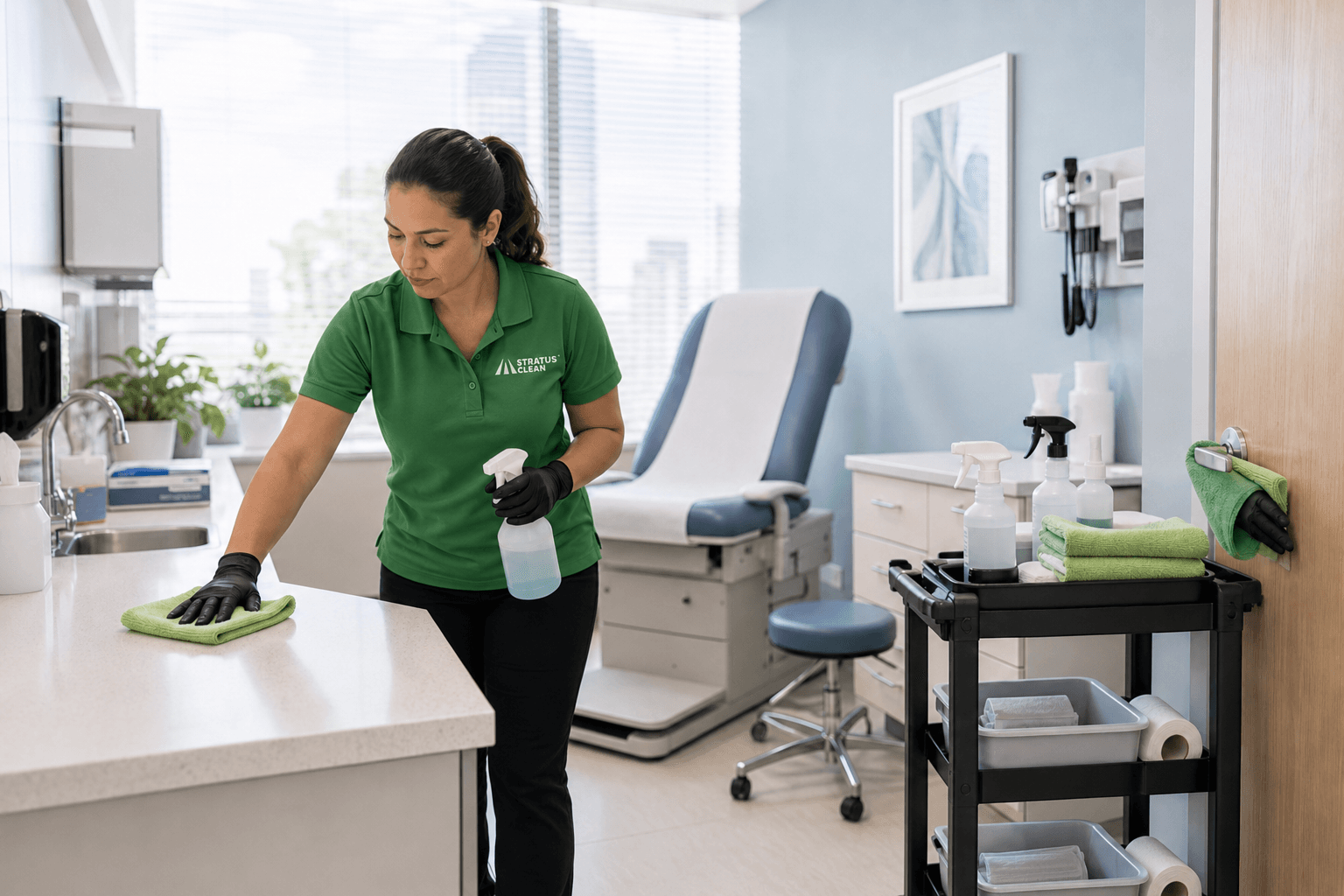
Businesses still ask about disinfecting services, but the conversation has matured. A strong facility plan is not built around fear. It is built around routine cleaning, high-touch attention, correct product use, good communication, and realistic expectations for the building type.
This FAQ helps Palm Beach offices, medical offices, schools, gyms, retail stores, and managed properties compare disinfecting services without confusing them with routine janitorial work.
What is the difference between cleaning and disinfecting?
Cleaning removes soil, dust, residue, and impurities from surfaces. Disinfecting uses an EPA-registered disinfectant to kill certain germs on hard, nonporous surfaces when used according to the label.
The CDC advises cleaning surfaces before sanitizing or disinfecting because dirt can make it harder for the product to work. That means disinfecting should not replace cleaning. It should be used where appropriate after the surface is prepared.
Do all businesses need daily disinfecting?
Not necessarily. The right frequency depends on the facility, traffic, surface type, illness concerns, and whether there are industry-specific rules. The CDC recommends regular cleaning of high-touch surfaces and disinfecting when someone has obviously been ill or when the facility determines additional disinfecting is needed.
Healthcare settings, childcare spaces, food areas, and regulated environments may have separate requirements, so always follow the rules that apply to your facility.
What surfaces are usually included?
Commercial disinfecting services often focus on high-touch hard surfaces such as:
- Door handles and push plates
- Counters and reception surfaces
- Light switches and railings
- Elevator buttons
- Restroom fixtures and dispensers
- Breakroom counters and appliance handles
- Conference tables and shared touchpoints
- Gym equipment touchpoints where products are surface-appropriate
Soft surfaces, electronics, unfinished materials, and specialty equipment may require different procedures or exclusions.
Why does dwell time matter?
Disinfectants have label directions. Many products require the surface to stay wet for a listed contact time. If the product is wiped away too quickly, used on the wrong surface, mixed incorrectly, or applied to visible soil, performance may be reduced.
The EPA maintains resources for selected EPA-registered disinfectants and product lists. Businesses should expect the cleaning provider to understand label directions and product fit.
Are electrostatic sprayers always needed?
No. Electrostatic application can be useful in some settings, but it is not a substitute for routine cleaning or manual attention to dirty surfaces. Many facilities are better served by a documented high-touch cleaning and disinfecting routine using appropriate products, microfiber, and trained staff.
The method should fit the facility, surface, product label, and reason for service.
Can green cleaning and disinfecting work together?
Yes, but with clarity. Green cleaning can use safer product choices and responsible methods for routine soil removal. Disinfecting requires an appropriate disinfectant for the target use. A facility can use green cleaning for day-to-day maintenance and targeted disinfecting when needed.
The scope should state which tasks are routine cleaning, which are sanitizing, and which are disinfecting.
What should a disinfecting quote include?
Ask for:
- Areas and surfaces included
- Product type and label considerations
- Whether cleaning happens before disinfecting
- Service frequency
- Timing and access requirements
- Exclusions for electronics, sensitive materials, clinical tasks, or staff-managed areas
- Communication if an illness-related service is requested
How does disinfecting fit with janitorial service?
For most businesses, disinfecting is one layer of a broader cleaning plan. Restrooms still need cleaning. Floors still need care. Trash still needs removal. Breakrooms still need attention. High-touch surfaces still need a schedule.
What should businesses avoid?
Avoid treating disinfecting as a substitute for routine cleaning. Dust, dirt, food residue, restroom soil, and floor debris still need to be removed. Also avoid using products without checking label directions, surface compatibility, contact time, and any required precautions.
Businesses should also avoid vague service requests such as "spray everything." A better request names the surfaces, reason for service, timing, occupied-space concerns, and whether the building has sensitive areas such as electronics, medical equipment, childcare surfaces, or food-contact areas.
How to communicate after illness concerns
If a business requests disinfecting because someone was sick, the facility contact should explain which areas were used, when the concern occurred, and whether any rooms should be excluded or prioritized. The cleaning provider can then recommend an appropriate scope and schedule.
Clear information helps disinfecting service stay targeted, efficient, and aligned with current guidance.
Stratus Clean Palm Beach can help businesses compare disinfecting services, janitorial services, and facility-specific cleaning scopes. Request a quote to discuss the right approach for your building.