
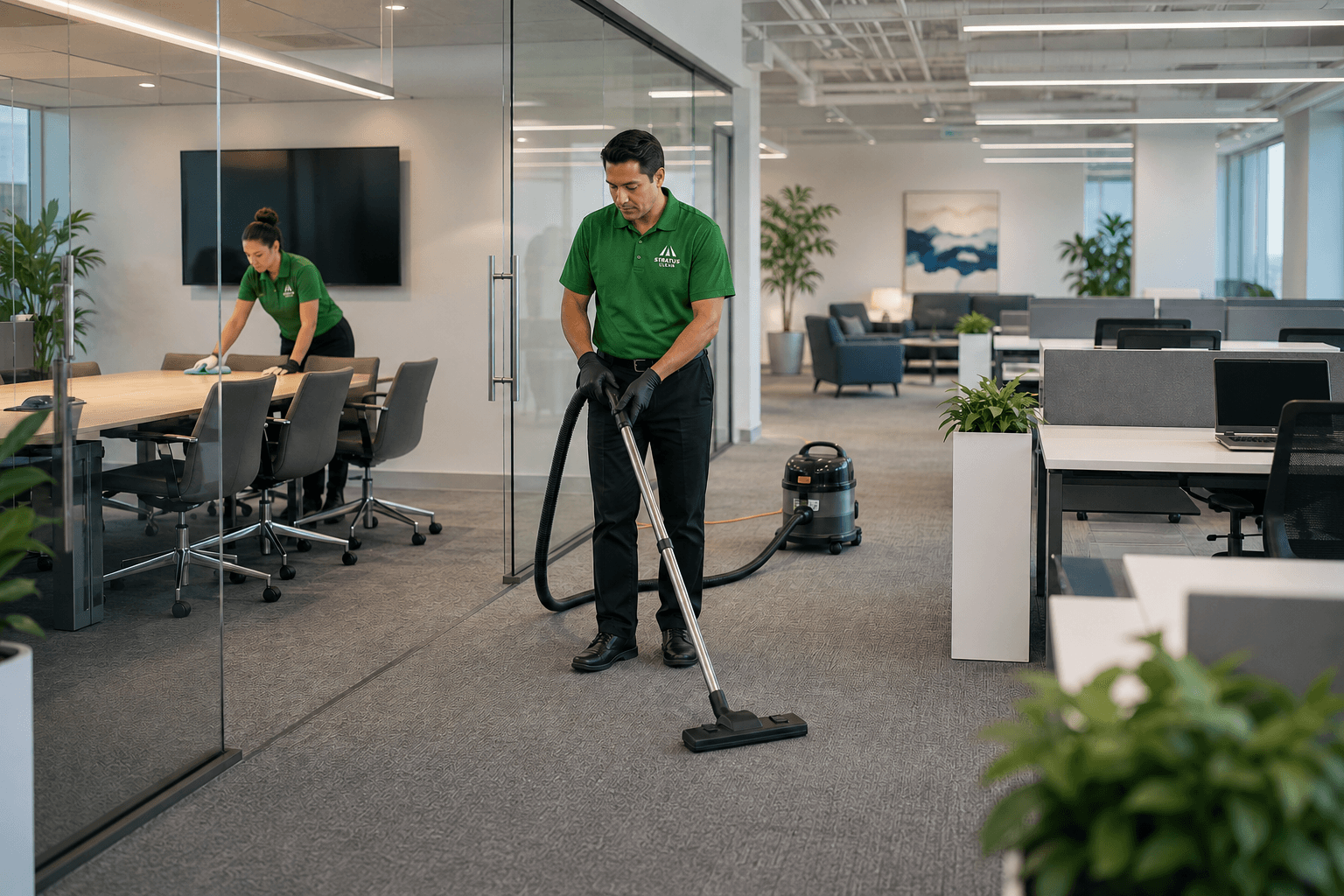
A successful office cleaning business is built on recurring trust. Customers expect the office to be ready every morning, restrooms to be consistent, trash to be removed, floors to look maintained, and communication to be simple when something changes.
That kind of reliability comes from systems, not luck.
Define the office customer you serve best
Office cleaning can mean a small professional suite, a multi-tenant building, a corporate office, a coworking space, a medical office, a call center, or a property-managed portfolio. Each account has different expectations.
Successful operators know which accounts fit their staffing, geography, equipment, and supervision model. A tight service area and a clear customer profile can be more profitable than chasing every lead.
Use a consistent walkthrough process
The walkthrough is where the business protects quality and margin. It should document:
- Square footage
- Number of offices and conference rooms
- Restroom count
- Breakrooms and kitchens
- Flooring types
- Glass and entrances
- Trash routes
- Access and alarm procedures
- Preferred cleaning windows
- Current complaints
- Specialty needs
The walkthrough should lead to a written scope that the customer can understand.
Price the labor, not just the square footage
Square footage matters, but it is not the whole price. Two offices with the same square footage can require very different labor if one has heavy restroom use, daily meetings, multiple kitchens, or high-touch reception areas.
Successful office cleaning businesses price based on the actual scope, production time, supervision, supplies, travel, equipment, and frequency.
Train for consistency
Customers notice consistency more than heroics. A team that performs the scope reliably is more valuable than a team that deep cleans one night and misses basics the next.
Training should cover:
- Task sequence
- Product labels and dilution
- Restroom detail
- Breakroom routines
- Dusting and high-touch cleaning
- Floor-care basics
- Security and professionalism
- Reporting issues
Inspect and communicate
Quality control prevents small misses from becoming lost accounts. Supervisors or owners should inspect accounts, especially after startup, staff changes, scope changes, or complaints.
Communication should be simple: one customer contact, one process for issues, and a clear way to request changes. Office managers do not want to manage the cleaning program every day.
Add services carefully
Office customers may need carpet cleaning, hard-floor care, window cleaning, disinfecting, day porter support, or post-construction cleanup. These services can strengthen the business, but they need training, equipment, and pricing.
Do not include specialty work for free just to win the account. It can undermine margins and create unclear expectations.
Consider support systems
Independent operators build every process themselves. Franchise operators may receive brand, training, account, marketing, technology, and operational support. The SBA's business guidance encourages prospective owners to understand the differences between franchises and independent businesses before deciding.
Success means keeping promises
Running a successful office cleaning business means winning the account, pricing it correctly, serving it consistently, and retaining it through communication and quality.
Office accounts need a startup plan
The first 30 days of an office cleaning account are important. The startup period should confirm keys or badges, alarm procedures, supply locations, trash routes, restroom expectations, desk policies, conference room routines, and how the customer wants issues reported. This is also the best time to identify anything that was missed during the walkthrough.
A startup checklist can prevent the most common early problems: cleaners cannot access a room, the customer expected desks to be cleared, restroom supplies are stored elsewhere, trash has to be taken to a specific dock, or conference rooms need to be reset before a weekly meeting.
Retention depends on visible consistency
Office customers usually notice patterns before they complain. If a conference room is missed once, it may be fine. If it is missed repeatedly, the customer starts questioning the whole service. Successful office cleaning businesses protect retention by inspecting the most visible areas first: restrooms, reception, breakrooms, conference rooms, trash, and floors.
When the visible standard is consistent, customers are more likely to trust the rest of the program.
If you are exploring a franchise path in commercial cleaning, review the Stratus Clean franchise page to learn more about the model and support available.