
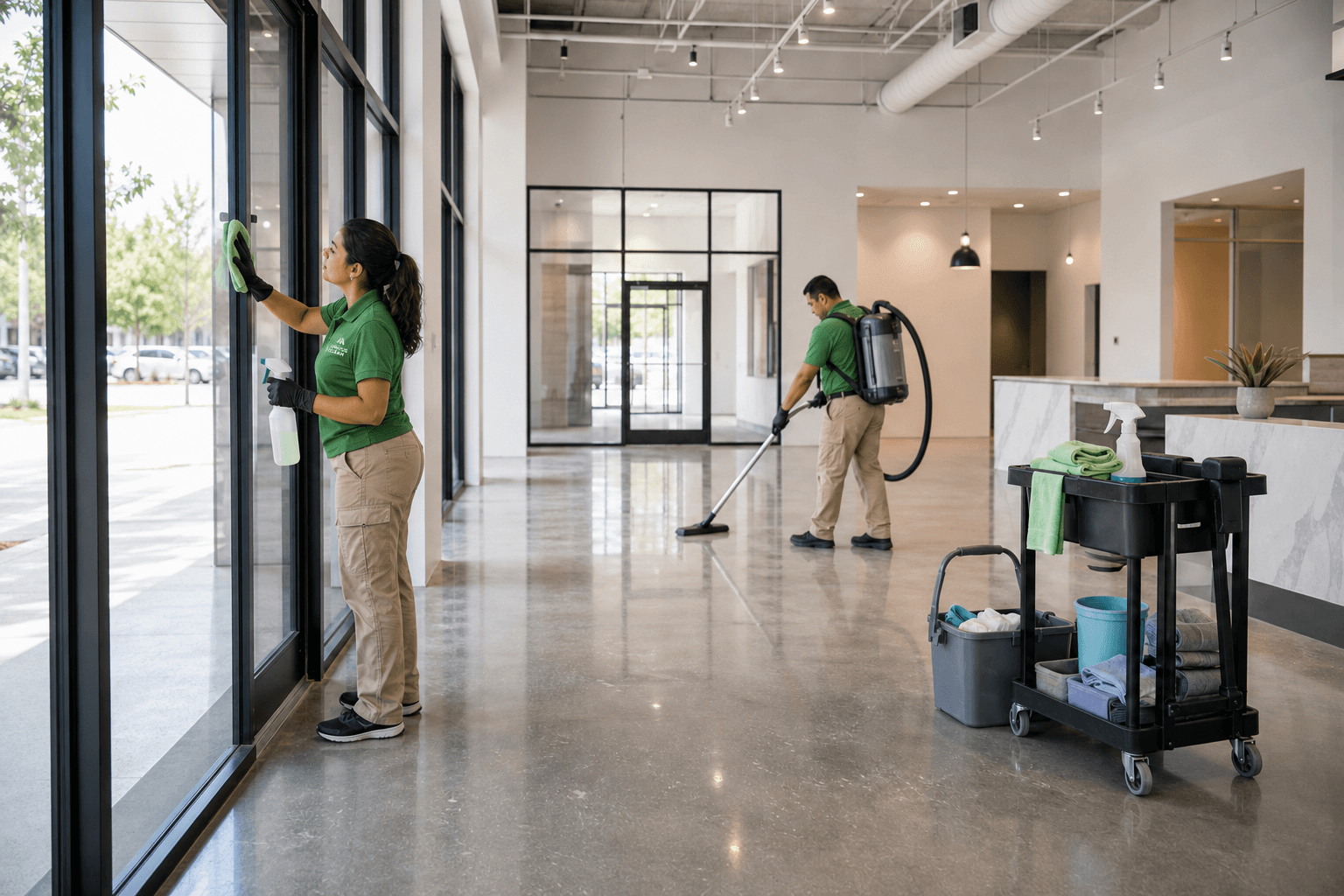
Construction and renovation projects leave behind dust, debris, smudges, adhesive residue, and fine particles that standard janitorial service is not designed to handle. Post-construction cleaning bridges the gap between finished work and an opening-ready commercial space.
For offices, retail stores, medical suites, restaurants, schools, and commercial buildouts, final cleaning should be planned before the opening date.
Rough cleaning and final cleaning are different
Rough cleaning may remove larger debris and prepare the site for the next phase of work. Final cleaning focuses on the details people notice when the space is ready to occupy: floors, windows, counters, fixtures, restrooms, cabinets, doors, and touchpoints.
The scope should match the stage of the project.
Dust can settle more than once
Fine construction dust often continues settling after the first pass. Commercial spaces may need staged cleaning or a final touch-up close to occupancy.
This is especially true when floors, HVAC, millwork, painting, and fixture installation happen near the end of the project.
Plan specialty services early
Post-construction cleaning may include floor care, carpet cleaning, window cleaning, pressure washing, restroom cleaning, and detailed surface work.
Stratus Clean Palm Beach can help prepare commercial spaces for turnover, inspection, staff move-in, and customer opening.
What makes post-construction cleaning different
Post-construction cleaning is not the same as routine janitorial service. New or renovated spaces often have fine dust, adhesive residue, paint specks, floor debris, window film, fixture dust, cabinet dust, restroom dust, and construction soil in corners and edges. The goal is to move the space from construction-complete to business-ready.
Commercial projects may need cleaning at several stages. A rough clean can remove larger debris and prepare the space for final trades. A final clean can detail surfaces, restrooms, floors, glass, and visible areas. A touch-up clean can happen close to opening after punch list work, furniture delivery, signage installation, or staff move-in.
Why timing matters before opening
The cleaning schedule should be coordinated with contractors, property managers, movers, and business owners. If cleaning happens too early, dust may settle again and trades may disturb finished areas. If cleaning happens too late, the opening team may be forced to work around cleaning crews.
For a smoother turnover, identify the final inspection date, furniture delivery, technology installation, stocking schedule, staff training, and public opening. Then build cleaning around those milestones.
Areas that need detailed attention
Post-construction cleaning should define each area in the scope:
- Entry doors, thresholds, and glass
- Lobbies, reception areas, and corridors
- Restrooms, partitions, fixtures, mirrors, and floors
- Office areas, desks, counters, cabinets, shelves, and ledges
- Breakrooms, sinks, appliance exteriors, and counters
- Hard floors, carpet, baseboards, corners, and edges
- Interior glass, window sills, and frames
- Exterior entrances and pressure washing when needed
Details matter because construction dust can hide in places routine cleaning does not usually target.
Specialty services after renovation
A newly renovated facility may need carpet cleaning, hard floor cleaning, strip and wax, buffing, window cleaning, pressure washing, and restroom detail before it feels complete. These services should be discussed early because equipment access, drying time, and sequencing can affect the opening schedule.
For example, floor care may need to happen before furniture is moved into place. Window cleaning may be easier before fixtures or displays block access. Pressure washing may need daylight and exterior access. Planning these details prevents last-minute friction.
Post-construction cleaning for local businesses
Stratus Clean Palm Beach can support post-construction cleaning for offices, retail stores, medical suites, dental offices, schools, gyms, banks, restaurants, showrooms, and property-managed spaces. A local walkthrough helps define the level of dust, the surfaces involved, the service deadline, and the cleaning team needed for the project.
Questions to ask before scheduling the final clean
Before setting the final cleaning date, ask whether all major trades will be finished, whether punch list work will continue, whether HVAC has been running, whether floors are ready for specialty care, whether windows still have labels or film, and whether furniture or fixtures will be installed before or after cleaning. These details affect timing and labor.
It is also useful to ask who will remove construction debris, who will clean above-reach areas, which restrooms are ready, whether water and power are available, and whether the cleaning team needs badges, escorts, keys, or after-hours access. A better handoff creates fewer surprises close to opening day.