
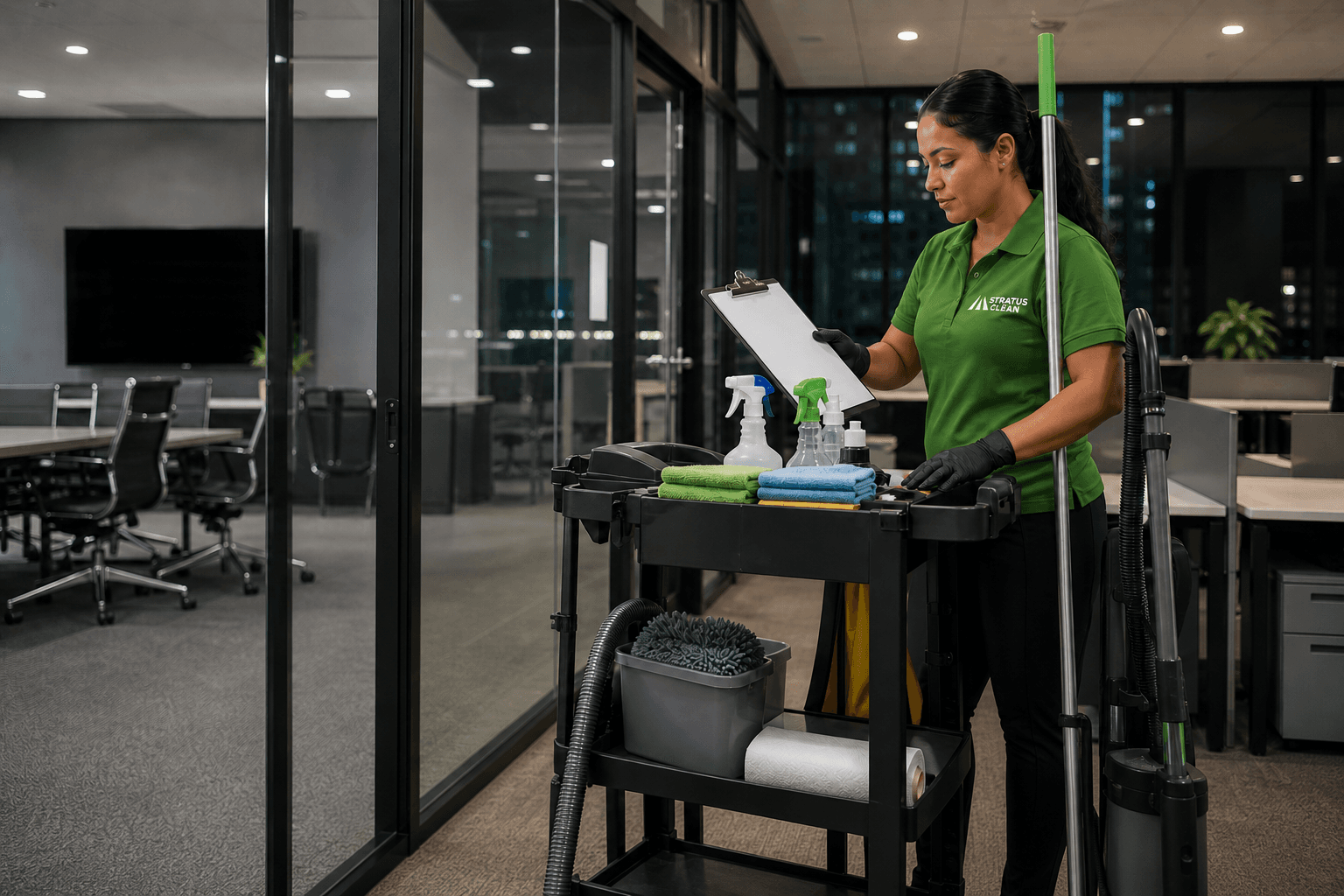
Government buildings can be harder to clean than ordinary offices because they combine public access, security procedures, staff-only areas, records-sensitive spaces, restrooms, waiting rooms, meeting rooms, and high daily traffic. Cleaning has to support public trust while respecting access rules and operational requirements.
Whether the facility is municipal, county, administrative, public safety-adjacent, or community-facing, the cleaning plan should be specific.
Public areas set the tone
Visitors often judge a public building by the entrance, lobby, counters, waiting areas, restrooms, and floors. These areas should stay presentable even during busy periods.
Priority public areas include:
- Entry doors and glass
- Security or check-in areas
- Public counters
- Waiting room seating
- Restrooms
- Corridors
- Elevators and railings
- Meeting rooms
If the building handles public appointments, restrooms and waiting areas may need day porter support.
Security and access must be documented
Government buildings often have restricted areas, badge requirements, alarm procedures, locked rooms, records, equipment, or public safety concerns. Cleaning teams need clear instructions about where they can go, when they can enter, and what is off limits.
The scope should define:
- Approved cleaning areas
- Restricted rooms
- Key or badge handling
- Sign-in procedures
- Escort requirements
- After-hours access
- Incident reporting
Security is part of the cleaning plan.
Restrooms carry heavy public use
Public restrooms in government facilities may need more frequent cleaning and supply checks than staff-only restrooms. Fixtures, partitions, floors, dispensers, counters, trash, and odor control should be included.
If restrooms serve court visitors, permit offices, community centers, libraries, or service counters, traffic patterns should guide frequency.
Floors need durability planning
Government buildings often have corridors, lobbies, public meeting rooms, and service counters with steady foot traffic. Floors can collect rainwater, sand, grit, and scuffs.
A floor plan may include:
- Daily vacuuming or dust mopping
- Wet mopping
- Entrance mat maintenance
- Carpet cleaning
- Hard-floor buffing or finish care
- Restroom floor detail
Floor care should be scheduled around public hours and safety requirements.
Communication needs to be clear
Government facilities may involve multiple stakeholders: facility managers, department heads, security, procurement, and public-facing staff. Cleaning communication should be structured so issues do not get lost.
Useful routines include a designated contact, service notes, inspection schedules, and a process for special events or emergency cleaning requests.
Public buildings need reliable partners
Cleaning a government building is about consistency and trust. The provider should understand that the facility serves employees and the public, often under strict operating expectations.
Procurement scopes should be precise
Government and public-sector cleaning scopes often move through procurement or formal approval. Precision matters. The request should define square footage, service frequency, room types, restroom count, floor surfaces, public hours, security requirements, supply responsibilities, and any special events or board meetings that affect cleaning.
When the scope is precise, providers can submit more comparable proposals. It also helps the facility avoid disputes after award because the cleaning expectations are documented from the start.
Plan for public meetings and peak days
Many government buildings have uneven traffic. Permit days, hearings, public meetings, elections, training sessions, and community events can create spikes in restroom use, trash, floors, and waiting areas. A static nightly schedule may not cover those peaks.
The cleaning plan should identify peak days and decide whether extra service, day porter support, or post-event cleaning is needed. This keeps public areas ready without over-servicing quieter days.
Separate staff-only and public standards
Government buildings often include staff offices, public counters, meeting rooms, storage areas, and restricted spaces. Each zone may need a different standard and schedule. Public restrooms and counters may need frequent attention, while staff-only offices may need after-hours routine service.
Keep records of service issues
Because public facilities often involve multiple departments, service notes are useful. Record recurring supply shortages, access problems, floor concerns, and event-related requests. Documentation helps the facility contact make better decisions when budgets, scopes, or schedules are reviewed.
Those records also make annual planning easier because the cleaning scope can be adjusted from evidence instead of memory.
Stratus Clean Palm Beach supports government facility cleaning, janitorial services, floor care, day porter support, and specialty cleaning for public-facing commercial buildings. Request a quote to discuss a facility-specific cleaning scope.