
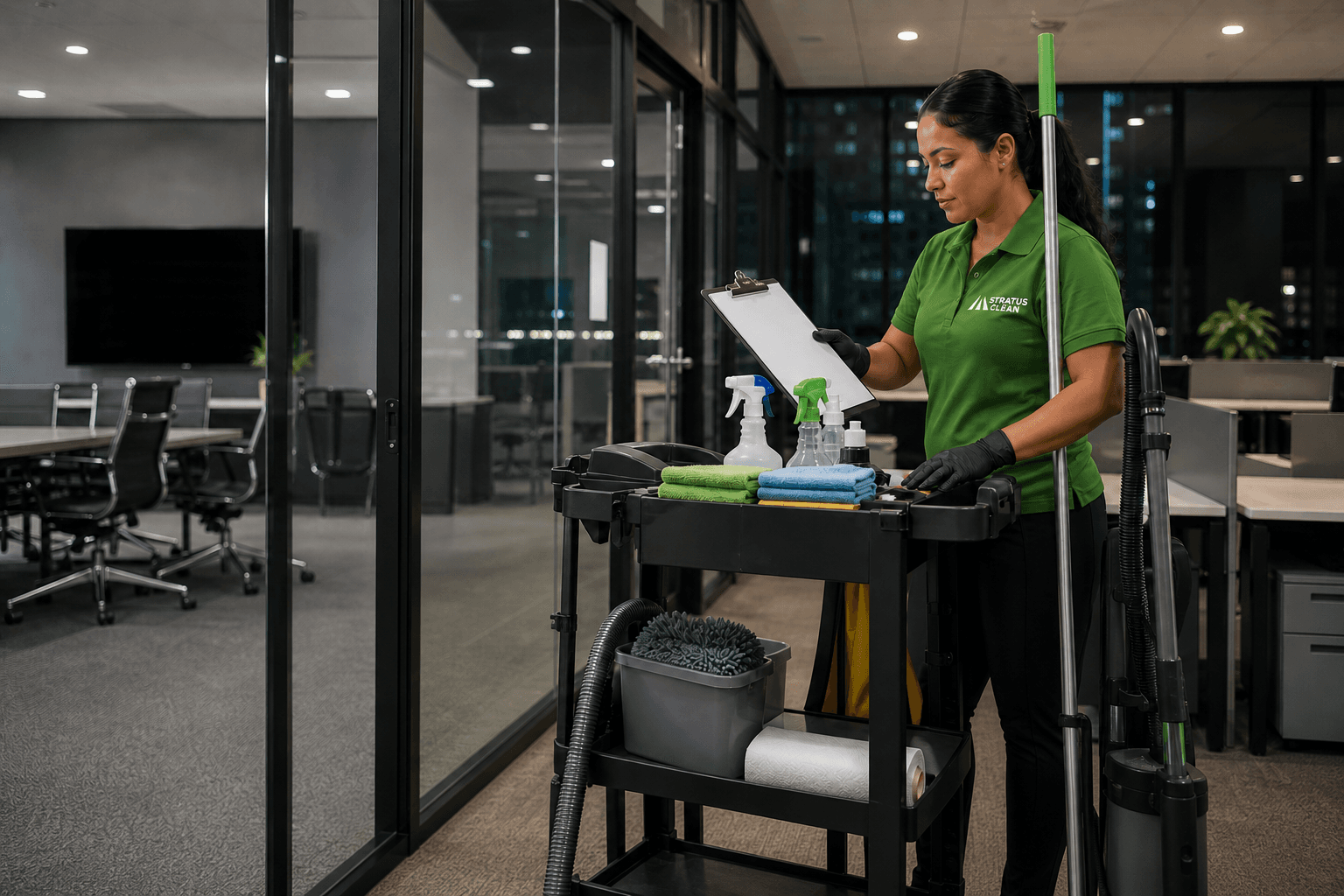
Growing a cleaning business is not only about finding more accounts. Sustainable growth requires repeatable service, clear pricing, trained teams, quality control, and a way to keep customers confident after the first month. Commercial cleaning can be attractive because offices, medical spaces, schools, gyms, retail stores, and managed properties need recurring support, but growth can strain a business that does not have systems.
These five steps help cleaning business owners think about expansion in a practical way.
1. Choose the accounts you are built to serve
Not every account is a good fit. A small crew may be strong in offices, retail spaces, and professional suites but not ready for large industrial buildings or multi-site medical groups. A growing business should define the facility types it can service well before chasing every lead.
Useful account categories include:
- Professional offices and corporate suites
- Medical, dental, and healthcare-adjacent spaces
- Schools, childcare centers, and education buildings
- Retail stores, banks, gyms, and service businesses
- Warehouses, light industrial spaces, and managed properties
The goal is to build a customer base where your staffing, equipment, training, and quality process fit the actual scope.
2. Build a repeatable walkthrough process
Cleaning businesses grow faster when every proposal is built from a consistent discovery process. A walkthrough should capture square footage, restroom count, flooring types, traffic patterns, supply responsibilities, access details, schedule preferences, and current pain points.
This protects the business from underpricing and protects the customer from vague expectations. If the scope is written clearly, the team knows what to do, the customer knows what is included, and service issues are easier to solve.
3. Standardize service without making it generic
A cleaning business needs standard operating routines, but every facility still needs a custom scope. Standardization should live in the process: how teams are trained, how checklists are built, how quality is inspected, how supplies are handled, and how communication works.
Customization should live in the proposal: which rooms are included, how often tasks happen, which floor-care services are needed, and whether the account requires day porter support, specialty cleaning, or after-hours access.
4. Protect quality before adding volume
Fast growth can create service drift. Missed trash, inconsistent restrooms, rushed floors, poor communication, and unclear staffing can damage an account that took months to win. Quality control should be part of the growth plan, not something added after complaints.
Helpful controls include:
- Written scopes and checklists by account
- Supervisor inspections
- Clear customer communication channels
- Staff training on products, surfaces, and equipment
- Issue tracking and follow-up
- Periodic review of account profitability and labor time
The U.S. Bureau of Labor Statistics describes janitors and building cleaners as workers who keep many types of buildings clean, orderly, and in good condition. That broad role becomes much easier to manage when the business has repeatable expectations for each site.
5. Decide whether a franchise system fits your goals
Some owners want to build everything independently. Others prefer the support, brand, training, account development, and operating systems that can come with a franchise model. The SBA notes that franchising is different from buying or building an independent business because the franchise relationship affects control, support, and brand standards.
Before choosing a path, compare:
- Startup costs and ongoing fees
- Training and operating support
- Brand recognition
- Territory and account opportunities
- Marketing, sales, and proposal help
- Technology, billing, and quality systems
- Long-term growth goals
Growth should make the business stronger
More accounts only help if the business can keep promises. A stronger cleaning business grows by choosing the right customers, documenting the scope, training people well, and monitoring quality. That is what turns commercial cleaning from a job-by-job hustle into a durable service business.
Metrics to watch as you grow
Growth should be measured with more than top-line revenue. Track account retention, labor hours versus estimate, complaint frequency, missed-task patterns, supply costs, travel time, and supervisor time. If a new account creates repeated overtime or constant rework, the business may need a scope correction before adding more accounts.
Also review customer concentration. One large account can be valuable, but depending too heavily on one customer can create risk. A balanced book of recurring office, retail, medical, school, and property accounts can make scheduling and revenue more stable.
When to slow down before scaling
It is usually better to pause growth briefly than to let service quality drop. Warning signs include rushed walkthroughs, vague proposals, repeated customer complaints, difficulty covering absences, inconsistent product use, and supervisors spending most of their time fixing preventable issues.
Before adding the next account, make sure the business can answer three questions: who will do the work, how will the work be inspected, and what margin should the account produce after realistic labor and supply costs?
If you are comparing cleaning franchise options or want to learn how Stratus supports local operators, visit the Stratus Clean franchise page.