
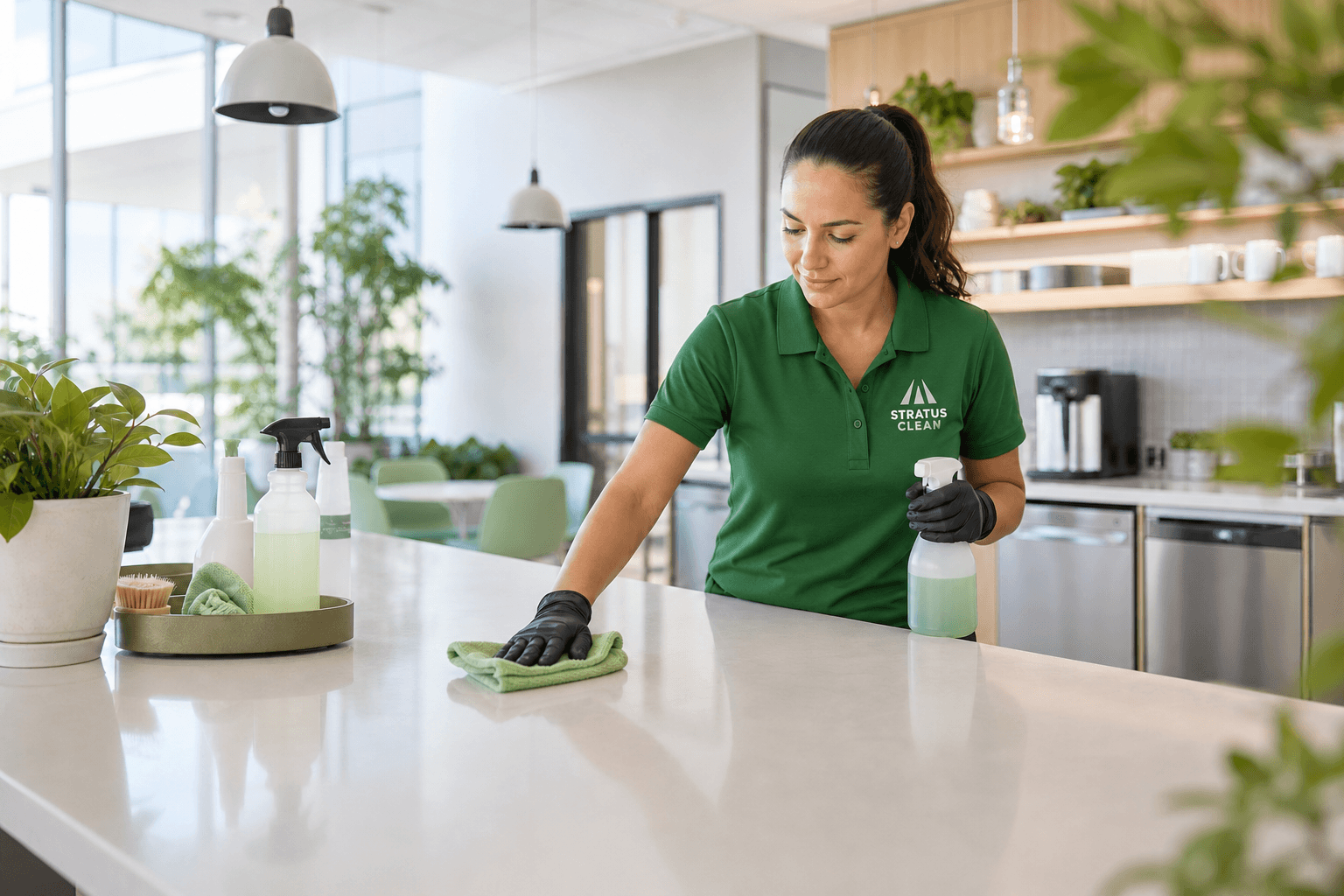
Cleaning supports healthier buildings, but cleaning products and procedures must be handled responsibly. OSHA warns that some cleaning chemicals can cause asthma or trigger asthma attacks, and improper mixing can create serious hazards. For employers, property managers, and facility teams, this makes product selection, training, ventilation awareness, and communication important parts of a cleaning program.
This article is not medical advice. It is a facility-planning guide for reducing avoidable cleaning-related irritation and building a more responsible commercial cleaning scope.
Understand the difference between cleaning goals
Not every task needs the strongest chemical available. A facility cleaning plan should distinguish between:
- Cleaning: removing soil, dust, and residue
- Sanitizing: reducing certain germs to levels defined by product use and surface type
- Disinfecting: using an EPA-registered disinfectant according to label directions
- Deodorizing: addressing odor sources rather than masking them
- Specialty cleaning: floor care, carpet cleaning, pressure washing, or project work
Using the right product for the right task can reduce unnecessary exposure while still keeping the facility clean.
Choose safer products where appropriate
The EPA Safer Choice program helps purchasers identify products that perform and contain ingredients selected with human health and environmental considerations in mind. Safer products are especially useful for routine office cleaning, breakrooms, common areas, and occupied spaces where lower odor and responsible chemistry matter.
That does not mean one product works everywhere. Medical offices, food areas, restrooms, gyms, and high-risk situations may require specific products. The key is to choose intentionally and follow the label.
Train teams not to mix chemicals
One of the most important safety rules is also one of the simplest: do not mix cleaning chemicals. OSHA specifically warns that mixing bleach and ammonia can cause severe harm. Training should cover product labels, dilution, personal protective equipment, storage, and what to do if a product is misused.
For businesses hiring a cleaning provider, it is reasonable to ask how products are selected, labeled, stored, and used.
Ventilation and timing matter
Some cleaning tasks are better scheduled after hours or when areas can air out. Strong odors, floor finishes, carpet cleaning, disinfecting, and restroom deep cleaning can be disruptive if done during busy office hours.
The CDC notes that protective indoor ventilation practices can reduce airborne viral concentrations and overall exposure to occupants. Cleaning teams are not HVAC contractors, but they should coordinate with the facility when ventilation, odors, humidity, or timing affects comfort.
Reduce dust and residue
Asthma concerns are not only about chemicals. Dust, pollen, mold concerns, moisture, and poor floor maintenance can also affect how a building feels. Routine dusting, vacuuming with appropriate equipment, entry mat care, restroom moisture control, and prompt spill attention all matter.
For Palm Beach businesses, humidity, rain, and tracked-in debris can make dust and floor residue harder to manage if the schedule is too light.
Ask better questions in the quote process
When comparing cleaning providers, ask:
- Which products are used for routine cleaning?
- Are greener products available?
- How are disinfectants selected and applied?
- How are staff trained on labels and dilution?
- Are strong-odor tasks scheduled after hours?
- How are supply closets organized?
- Are product changes communicated to the facility contact?
These questions help align cleaning performance with employee comfort.
Build a responsible cleaning program
Responsible cleaning balances appearance, hygiene, safety, and comfort. Stratus Clean Palm Beach can help businesses compare green cleaning, janitorial services, office cleaning, and specialty cleaning programs.
Document product changes
If a facility changes products, adds disinfecting, or introduces a floor finish or specialty cleaner, document the change and communicate it to the facility contact. This is especially important in offices, schools, healthcare-adjacent spaces, and buildings where employees have fragrance or respiratory sensitivities.
Documentation should include where the product is used, why it is used, and whether it affects service timing. For example, a stronger restroom product or floor finish may be better scheduled after hours.
Pair cleaning with facility maintenance
Cleaning can reduce dust and residue, but persistent respiratory concerns may also involve HVAC, moisture, leaks, outdoor air, filtration, or building maintenance. Facility managers should treat recurring complaints as a signal to review both cleaning and building systems.
That combined approach is more effective than changing products repeatedly without understanding the source of the issue.
Request a quote to discuss a cleaning plan that fits your facility, schedule, surfaces, and product preferences.