
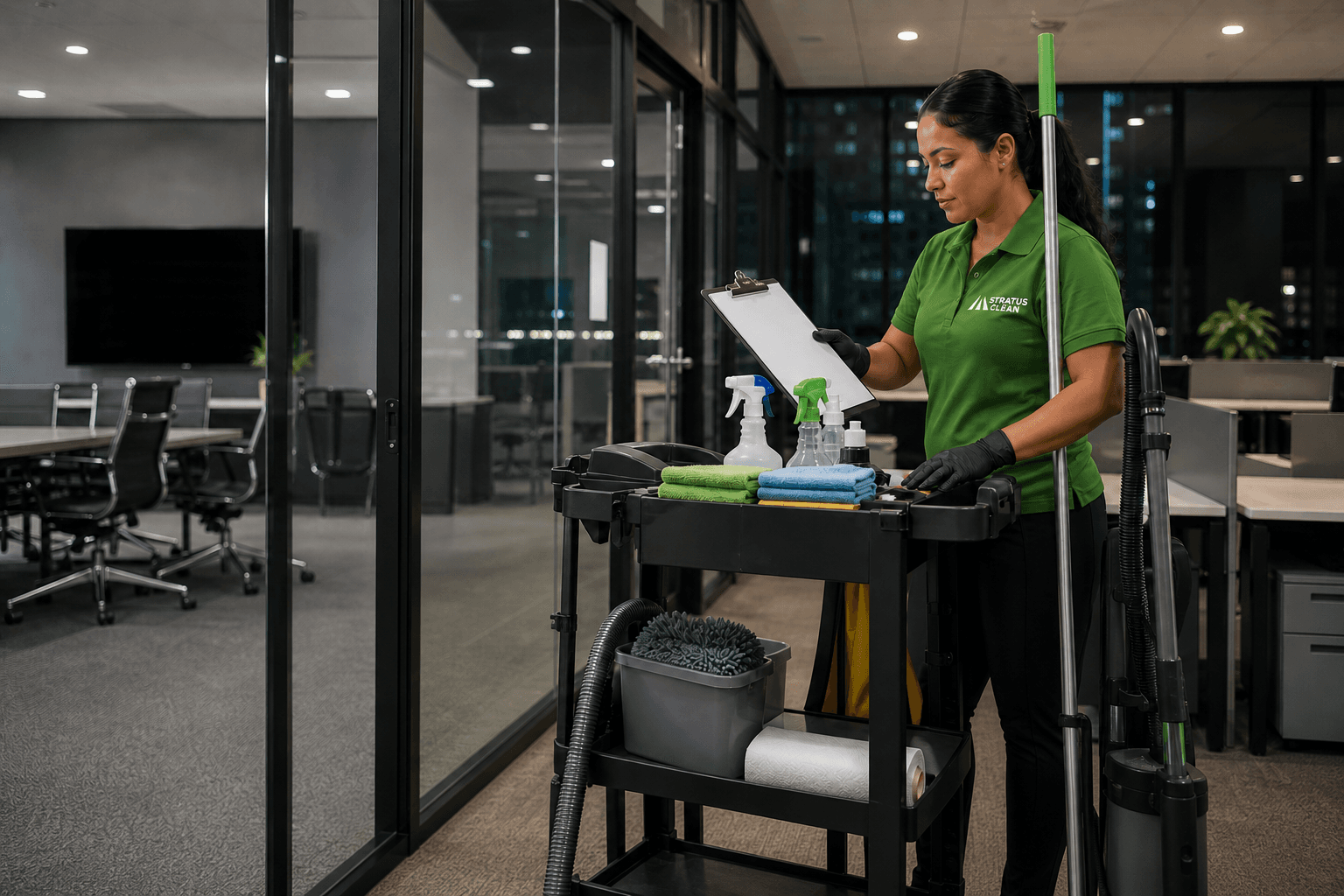
Cleaning and sanitizing an office should be practical, consistent, and based on how the workplace is actually used. A small office with private desks does not need the same schedule as a busy professional suite with shared conference rooms, visitors, restrooms, and a high-use breakroom.
The goal is to remove soil, maintain shared spaces, and use sanitizing or disinfecting products appropriately where they fit the surface and need.
Clean before sanitizing
The CDC advises cleaning surfaces before sanitizing or disinfecting because dirt and impurities can reduce product effectiveness. That means wiping away soil, dust, spills, and residue is the first step.
For offices, routine cleaning should cover:
- Desks and open work surfaces where included
- Conference tables
- Reception counters
- Breakroom counters and tables
- Restroom surfaces
- Door handles and push plates
- Light switches
- Shared equipment touchpoints
- Floors and trash areas
Focus on high-touch surfaces
High-touch surfaces are the areas many people contact during the day. They should be named in the scope so they are not missed.
Examples include:
- Door handles
- Elevator buttons
- Railings
- Faucets
- Dispensers
- Appliance handles
- Printer and copier controls
- Shared phones
- Conference room controls
- Chair arms
The frequency should reflect office traffic.
Separate sanitizing from disinfecting
Sanitizers and disinfectants are not the same thing. Products have different claims, surfaces, dwell times, and label directions. The EPA maintains resources for registered disinfectants, and cleaning teams should follow product labels carefully.
For many offices, routine cleaning plus targeted high-touch attention is the baseline. Disinfecting may be added where appropriate, after illness concerns, or for specific high-touch hard surfaces.
Do not forget restrooms
Restrooms need consistent cleaning, supply checks, trash removal, odor control, floor attention, and touchpoint service. A restroom can look clean at opening and still need support later if the office is busy.
For high-traffic offices, day porter service may be useful for mid-day restroom checks.
Keep breakrooms under control
Breakrooms often need more attention than managers expect. Coffee spills, food residue, sink buildup, trash, appliance handles, tables, chairs, and floors can create odor and employee complaints.
Define what the cleaning team handles and what employees must clear first. Personal dishes, food containers, and refrigerator interiors should be addressed in the workplace policy.
Plan for shared desks and hybrid work
If employees share desks or hoteling stations, the office needs clear rules. Cleaning teams cannot properly clean surfaces covered with papers, personal items, or electronics.
Hybrid offices should define:
- Clear-desk expectations
- Who cleans keyboards, mice, and personal devices
- Which surfaces are included
- Peak occupancy days
- Conference room reset needs
Build a schedule that fits the office
Office cleaning may be nightly, several times per week, weekly, or supported by a day porter. The right schedule depends on restrooms, traffic, visitors, floor types, and employee expectations.
Create an office cleaning responsibility map
Many office cleaning conflicts come from unclear ownership. The cleaning provider may handle trash, restrooms, floors, conference rooms, and open counters, while employees may be responsible for personal dishes, confidential papers, desk clutter, and food left in refrigerators. Put those expectations in writing.
The responsibility map should also address shared equipment. Keyboards, mice, headsets, phones, and personal devices may require employee-managed cleaning, while counters, tables, handles, and other shared hard surfaces can be part of the janitorial scope.
Review the plan after occupancy changes
Office cleaning and sanitizing needs change when the team grows, hybrid schedules shift, or client meetings increase. Review the plan after a move, remodel, staffing change, return-to-office push, or new tenant. A scope that worked for 20 employees may not be enough for 60 employees and daily visitors.
Regular review keeps the program practical instead of letting small gaps become complaints.
Keep supplies part of the plan
Sanitizing routines fail quickly if wipes, soap, liners, or paper goods run out. Decide who buys supplies, who restocks them, and who reports low inventory so the office does not confuse a supply issue with a cleaning failure.
Stratus Clean Palm Beach can help businesses build office cleaning, janitorial service, disinfecting services, and day porter support. Request a quote to define the right cleaning and sanitizing plan.