
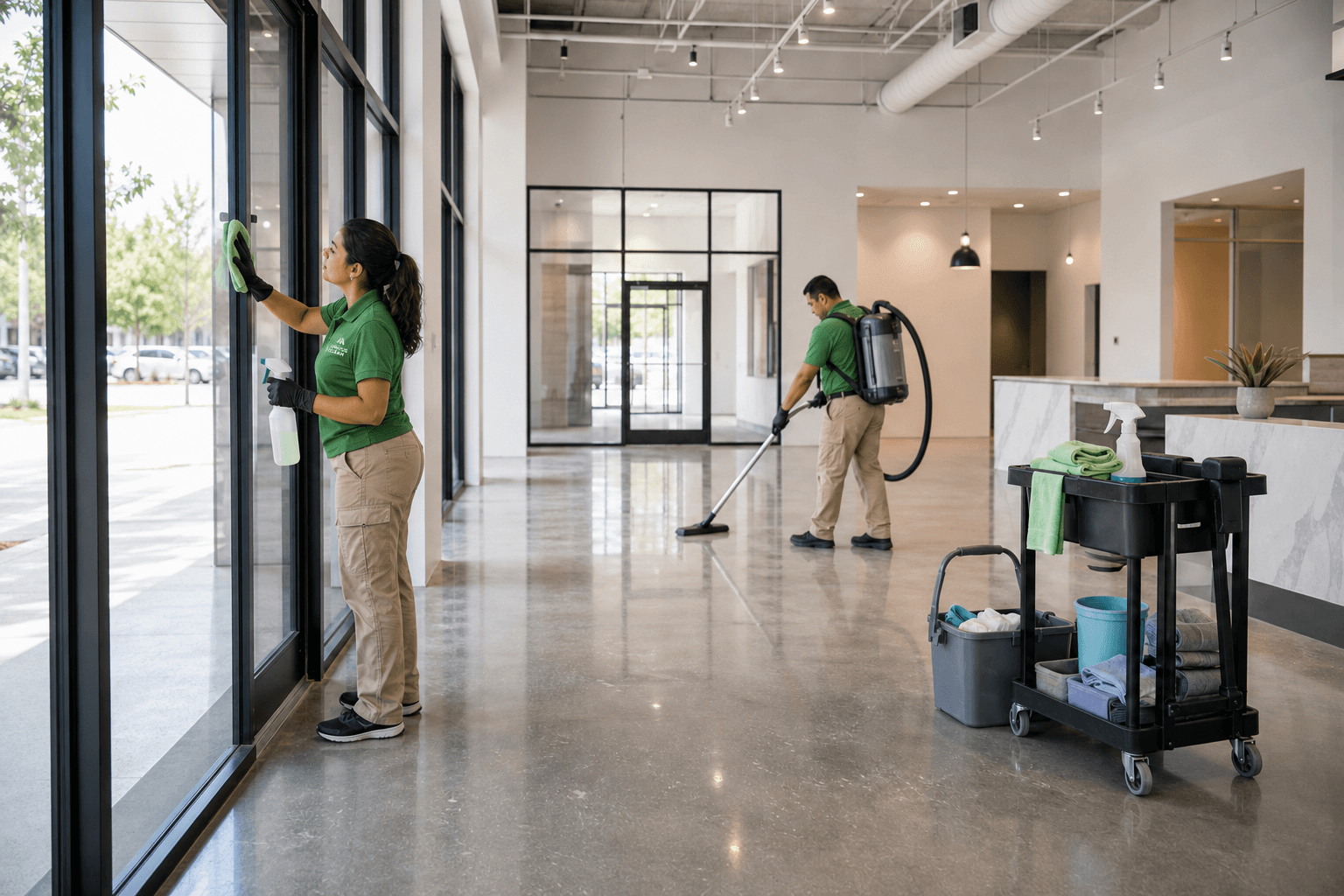
Construction work leaves behind more than visible debris. Dust settles on ledges, vents, floors, glass, fixtures, millwork, restrooms, cabinets, and corners. Adhesive residue, packaging, drywall dust, paint specks, labels, and tracked-in soil can make a new or renovated space feel unfinished.
Commercial post-construction cleaning should be planned in phases so the building is ready for inspection, turnover, staff, customers, patients, tenants, or opening day.
Start with safety and project boundaries
Cleaning should begin only when the space is ready for cleaning work. The contractor or project lead should confirm access, hazards, remaining punch-list items, utilities, and areas that are still under construction.
Construction dust can include materials that require care. OSHA's silica standard addresses occupational exposure to respirable crystalline silica in construction work, and dry sweeping can be restricted where it creates exposure risks. Commercial cleaning teams should avoid creating dust clouds and should use appropriate methods for the job.
Phase 1: Rough cleanup
Rough cleanup removes larger debris and prepares the space for detail work. Depending on the project, this may include:
- Removing loose debris and packaging
- Collecting trash
- Clearing floors
- Wiping heavy dust from broad surfaces
- Preparing restrooms and common spaces for later detailing
- Identifying sticky residue, paint, or adhesive areas
This phase is not the final clean. It creates access for the next stage.
Phase 2: Dust control and detail cleaning
Dust is the biggest post-construction issue. It settles repeatedly, especially if HVAC systems, vents, ceiling work, or punch-list tasks are still active.
Detail cleaning may include:
- Ledges, sills, baseboards, and trim
- Doors, frames, handles, and push plates
- Cabinets, counters, shelving, and millwork
- Restrooms, fixtures, partitions, and dispensers
- Interior glass and mirrors
- Light switches and touchpoints
- Vents and accessible grilles as agreed
- Corners and edges
The team may need multiple passes if dust continues to resettle.
Phase 3: Floor cleaning
Floors often need separate attention after construction. The right method depends on the surface and condition.
Carpet may need vacuuming with appropriate equipment, spot treatment, or extraction. Hard floors may need dust removal, scrubbing, residue removal, or finish work. Tile and grout may need detail cleaning. New flooring should be cleaned according to manufacturer or contractor guidance where available.
Do not assume aggressive scrubbing is safe for every new surface.
Phase 4: Glass and final presentation
Final cleaning prepares the building for handoff. This is where details matter: fingerprints, labels, smudges, dust lines, restroom fixtures, entrance glass, reception counters, and floors.
A final pass should focus on what occupants see first:
- Entrance and lobby
- Reception or front desk
- Restrooms
- Conference rooms or waiting rooms
- Corridors and floors
- Interior glass
- Doors and frames
- Breakrooms or kitchens
Build cleaning into the construction schedule
Post-construction cleaning works best when scheduled before occupancy but after major dust-producing work is complete. If cleaning happens too early, the space may need another pass. If it happens too late, opening day becomes stressful.
Ask the project team:
- When will dust-producing work be complete?
- Are utilities and water available?
- Which areas are excluded?
- Is floor finish or specialty protection required?
- Who handles construction waste?
- Is a final punch-list clean needed after inspections?
Prepare the space for opening
Stratus Clean Palm Beach provides post-construction cleaning for commercial spaces, offices, medical suites, retail buildouts, schools, gyms, and managed properties. Request a quote to plan cleanup around your project schedule and turnover date.
Common post-construction cleaning mistakes
The biggest mistake is scheduling the final clean while trades are still creating dust. Another mistake is treating construction cleanup like normal janitorial service. Post-construction cleaning often needs more time, different tools, repeated dust passes, and closer coordination with the project team.
Facilities should also avoid using aggressive methods on new finishes without approval. New floors, glass, fixtures, millwork, and counters can be damaged by the wrong pad, scraper, chemical, or process. When in doubt, confirm manufacturer or contractor guidance before cleaning.
What to include in the quote request
A better quote request includes project type, square footage, floor surfaces, number of restrooms, turnover date, access times, parking or loading details, whether utilities are active, and whether construction debris disposal is included by others. Photos and floor plans can help the cleaning provider estimate the level of dust and detail work.
The clearer the project information, the easier it is to schedule enough labor for a clean handoff.