
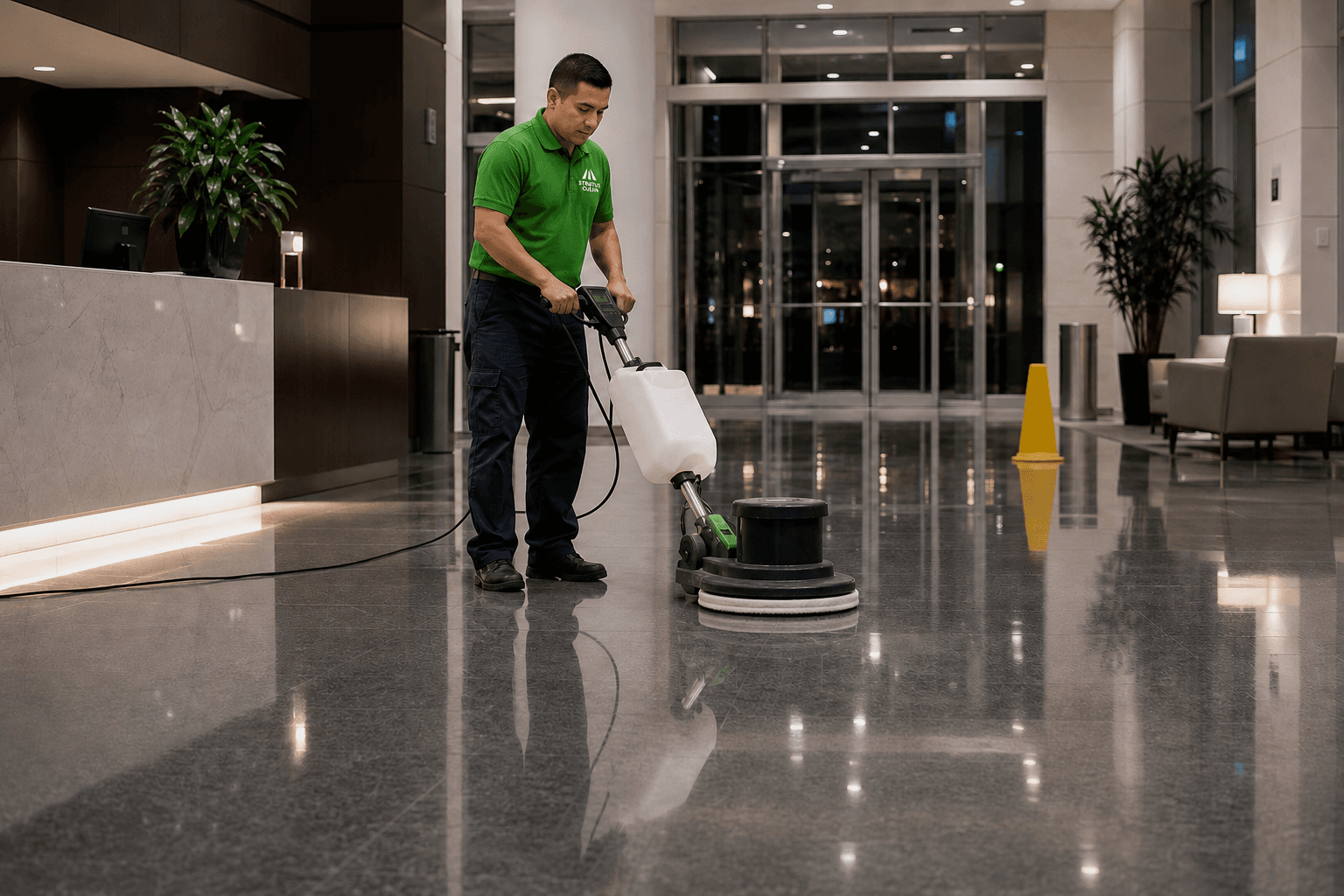
Rainy season changes the way Palm Beach buildings feel. Entrances collect more moisture, floors show soil faster, restrooms work harder, and humidity can make small cleaning gaps more noticeable. A commercial cleaning plan should adjust before the building starts looking tired.
For offices, medical practices, retail spaces, schools, gyms, banks, and property-managed buildings, the goal is not to overclean every room. The goal is to protect the areas that change most quickly when storms, wet shoes, sand, and heavier visitor traffic meet a busy facility.
Start with entrances and walk-off mats
The entrance is where rainy season cleaning either succeeds or starts falling behind. Water, grit, landscaping debris, and tracked-in soil can move from the front door into lobbies, hallways, elevators, and reception areas.
A stronger rainy season plan should confirm:
- Whether mats are the right size for the entrance
- How often mats are vacuumed or changed
- Which hard floors need extra mopping after storms
- How lobby glass and door hardware are maintained
- Who responds when water or debris appears during business hours
For high-traffic buildings, day porter service can help bridge the gap between scheduled nightly cleaning and what happens during the day.
Give floors a seasonal maintenance rhythm
Palm Beach businesses often need more floor attention in rainy months. Hard surfaces may need more frequent dust mopping, damp mopping, machine scrubbing, buffing, or periodic finish care. Carpeted areas may need spot treatment and scheduled extraction so soil does not settle deeper into fibers.
This is especially important for medical offices, professional offices, retail stores, gyms, schools, and multi-tenant buildings where floors carry most of the first impression. Review hard floor care and commercial carpet cleaning as separate quote items instead of assuming they are included in basic janitorial service.
Watch restrooms, odors, and humidity
Rainy season humidity can make restrooms, breakrooms, locker rooms, and trash areas feel worse faster. A cleaning plan should define surface cleaning, fixture detail, floor care, trash removal, restocking, and odor-control expectations clearly.
Facility teams should pay close attention to:
- Restroom floors and grout lines
- Trash and sanitary disposal areas
- Breakroom counters, sinks, and touchpoints
- Locker room benches, mirrors, and floors
- Areas where moisture collects near doors or drains
Recurring janitorial services should keep these spaces stable, while periodic detail cleaning can address buildup before it becomes a larger problem.
Adjust frequency around traffic, not just square footage
Rainy season cleaning should be based on how the building is used. A small medical office with back-to-back appointments may need more restroom and waiting room attention than a larger low-traffic administrative office. A retail store with weekend peaks may need floor and entrance support at different times than a professional office.
When requesting a quote, share your busiest days, visitor patterns, service hours, floor types, restroom count, and any areas that worsen after storms. That context helps Stratus Clean recommend a practical schedule instead of a generic checklist.
Consider exterior surfaces too
Exterior walkways, entry areas, storefronts, and loading zones can collect organic buildup, dirt, and stains during humid months. Commercial pressure washing can support curb appeal and safer-looking entrances when scheduled correctly around business hours and surface type.
Exterior cleaning does not replace indoor janitorial service, but the two work together. A clean walkway helps reduce what gets tracked inside, and a consistent interior plan helps the building stay presentable after customers, patients, employees, and vendors move through the space.
Add a common-area plan for condo and HOA properties
Condominium lobbies, elevators, corridors, clubhouses, mailrooms, and common restrooms can see wet shoes, sand, rolling carts, deliveries, and resident traffic throughout a stormy day. Association scopes should define entry-mat care, wet-floor response, lobby and elevator checks, floor frequency, and who reports leaks or maintenance concerns.
The commercial condominium and HOA cleaning page explains how recurring janitorial service, day porter coverage, floor care, glass cleaning, and pressure washing can be coordinated for association-managed spaces without treating the work as private-unit housekeeping.
Build a local rainy season quote
Businesses in West Palm Beach, Boca Raton, Palm Beach Gardens, Delray Beach, Riviera Beach, and nearby service areas should ask for a rainy season scope that names priority zones, floor care, restroom detail, daytime response, and periodic specialty cleaning.
If your building is already showing more soil, moisture, or odor issues than usual, use the service area directory or request a commercial cleaning quote with your city, ZIP code, facility type, and current cleaning concerns.