
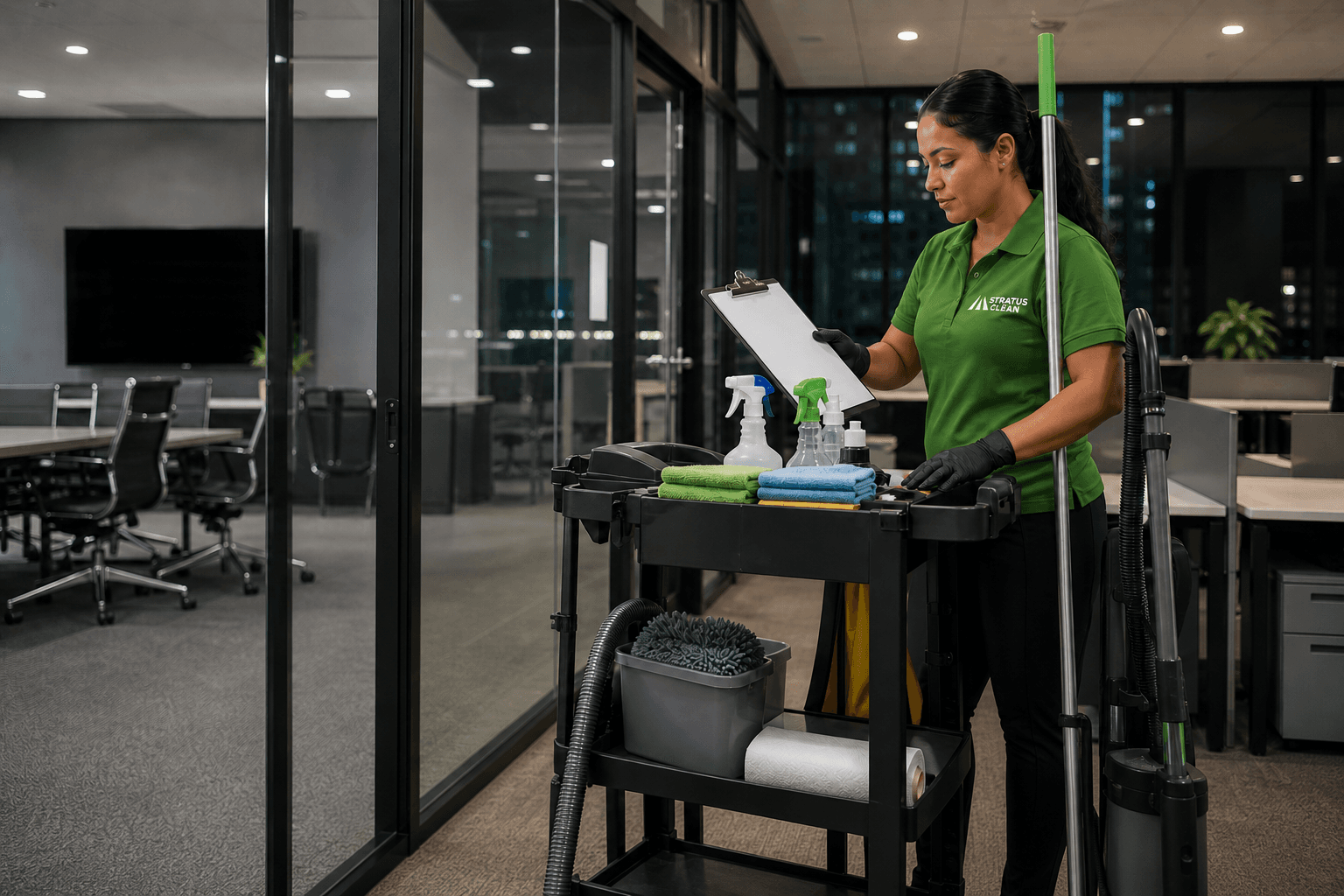
A commercial restroom cleaning program covers daily tasks and periodic detail work. Daily tasks include restocking paper and soap, emptying trash, cleaning and disinfecting fixtures, toilets, urinals, sinks, counters, mirrors, and high-touch points such as handles, dispensers, and partitions, and mopping floors. Periodic tasks include detail cleaning of grout, partitions, walls, vents, and deeper floor scrubbing. Frequency depends on traffic, facility type, and whether restrooms are monitored during business hours or only cleaned after hours.
The goal is not to overclean every restroom at the same level. The goal is to match cleaning frequency to how the space is used, so restrooms stay presentable, stocked, and hygienic without wasting resources on low-traffic areas.
What a commercial restroom cleaning program covers
A complete restroom cleaning program separates daily or routine tasks from periodic detail work. Routine tasks keep the restroom usable and presentable. Detail work addresses buildup that accumulates over time.
Daily or recurring tasks often include:
- Empty trash and replace liners
- Restock toilet paper, paper towels, hand soap, and seat covers where provided
- Clean and disinfect toilets, urinals, and toilet seats
- Clean and disinfect sinks, faucets, and counters
- Wipe mirrors and remove streaks or spots
- Clean high-touch points such as door handles, push plates, partition latches, dispensers, hand dryers, and flush handles
- Spot clean walls, partitions, and doors where soil or residue appears
- Mop floors with appropriate cleaner and disinfectant
- Remove visible debris and maintain appearance
- Report maintenance issues such as leaks, clogs, broken fixtures, or missing supplies
Periodic or detail tasks may include:
- Scrub grout lines and tile floors
- Detail clean partitions, stall doors, and door frames
- Wash walls and baseboards
- Clean vents, light fixtures, and ceiling corners
- Deep scrub floors with machine equipment
- Descale hard water buildup on fixtures
- Remove soap scum and residue from sinks and counters
- Polish fixtures and mirrors
- Address odor sources and drains
The frequency of detail tasks depends on traffic, facility type, and whether the restroom shows visible buildup. High-traffic restrooms may need detail cleaning monthly or quarterly. Low-traffic restrooms may need it less often.
How frequency depends on traffic and facility type
Restroom cleaning frequency should be based on how many people use the space and when they use it. Smaller offices with light restroom use may not need daily service; frequency should follow actual use. A busy retail store, medical office, gym, school, church, or multi-tenant building may need daily cleaning or multiple daily checks.
Facility type also influences the program:
Offices: Most offices need daily or scheduled after-hours restroom cleaning. Smaller offices with lighter use may need restroom service on a less-than-daily schedule. Offices with high visitor traffic, client meetings, or shared tenant spaces may need daily service plus day porter checks during business hours.
Medical offices and dental practices: Medical and dental waiting rooms see patient traffic throughout the day. Restrooms should be checked and restocked regularly during business hours. Daily after-hours cleaning should include disinfecting all touchpoints, fixtures, and floors. Periodic detail cleaning helps address buildup in grout, partitions, and high-touch areas.
Retail stores: Retail restrooms serve customers, employees, and visitors. Cleaning frequency depends on store hours, customer volume, and whether restrooms are public-facing or employee-only. High-traffic stores may need mid-day restroom checks in addition to nightly cleaning.
Gyms and fitness centers: Gym restrooms and locker rooms see heavy use, moisture, and frequent touchpoint contact. Many gyms need multiple daily restroom checks, restocking, and floor attention during operating hours. Nightly cleaning should include disinfecting showers, benches, lockers, floors, and all high-touch surfaces.
Schools and childcare centers: School restrooms may need cleaning after school hours and periodic checks during the day. Childcare restrooms may need more frequent attention based on age groups and diaper-changing areas.
Churches and community centers: Churches and community centers may need restroom cleaning after services, events, or scheduled building use. Frequency depends on event calendars and visitor volume.
Multi-tenant buildings: Office buildings, condominiums, and HOA properties often need daily common restroom cleaning in lobbies, clubhouses, amenity areas, and shared spaces. Day porter support may help monitor restrooms during business hours.
Day porter checks during busy hours vs nightly janitorial cleaning
For many busy facilities, after-hours restroom cleaning is not enough. Restrooms can become unusable, run out of supplies, or collect visible soil and odors during business hours. That is when day porter service becomes useful.
A day porter works during business hours to monitor restrooms, restock paper and soap, empty trash, spot clean fixtures and floors, and respond to spills or maintenance concerns. Day porter checks keep restrooms presentable without waiting for the nightly cleaning crew to arrive.
Nightly janitorial service still handles the full restroom reset after hours. The day porter bridges the gap between scheduled cleaning visits so restrooms do not become a complaint during the day.
The day porter vs nightly janitorial comparison explains how both services can work together in high-traffic buildings. The janitorial services office cleaning checklist includes restroom tasks as part of a broader cleaning program.
How to write a restroom cleaning scope and checklist
A restroom cleaning scope should name the tasks, frequency, products, and exclusions so both the facility and the cleaning provider understand expectations. A vague scope such as "clean restrooms daily" does not provide enough detail to measure quality or compare quotes.
A stronger restroom cleaning scope includes:
- Which restrooms are included
- Daily tasks and their frequency
- Periodic or detail tasks and their schedule
- Restocking responsibilities and who provides supplies
- High-touch cleaning and disinfecting expectations
- Floor care methods and frequency
- Trash removal and liner replacement
- Reporting procedures for maintenance issues or supply shortages
- Access instructions and service hours
- Day porter checks if the building is occupied during cleaning hours
- Any exclusions such as showers, lockers, or staff-managed areas
The scope should also state whether the facility provides paper, soap, trash liners, and cleaning supplies, or whether the cleaning provider is responsible for bringing those items.
Frequently asked questions
How often should commercial restrooms be cleaned?
Most commercial restrooms need daily cleaning. High-traffic restrooms in medical offices, retail stores, gyms, schools, and multi-tenant buildings may also need day porter checks during business hours to restock supplies, empty trash, and spot clean fixtures. Low-traffic restrooms in smaller offices may be cleaned on a less-than-daily schedule. Frequency should be based on how many people use the restroom and when they use it.
What is the difference between daily restroom cleaning and detail cleaning?
Daily restroom cleaning includes trash removal, restocking, disinfecting fixtures and touchpoints, cleaning sinks and counters, wiping mirrors, mopping floors, and maintaining appearance. Detail cleaning includes scrubbing grout, washing partitions and walls, descaling fixtures, deep scrubbing floors with machine equipment, and addressing buildup that routine cleaning cannot fully remove. Detail cleaning is usually scheduled monthly, quarterly, or as needed based on restroom condition.
Should restroom cleaning be part of janitorial service or a separate quote?
Restroom cleaning is usually included in recurring janitorial services as part of the daily or scheduled cleaning scope. Detail cleaning, floor scrubbing, and day porter checks may be quoted separately depending on the provider. Ask whether the quote includes routine restroom tasks or whether those are priced as add-ons.
How can I tell if my restroom cleaning program is working?
Walk the restrooms during business hours and after cleaning is complete. Check whether trash is removed, supplies are stocked, fixtures are clean and dry, mirrors are streak-free, floors are mopped, high-touch points are disinfected, and odors are controlled. If restrooms look inconsistent, run out of supplies, or collect visible soil during the day, the frequency or scope may need adjustment.
What should I do if restrooms are busy during the day?
Consider adding day porter service to monitor restrooms during business hours. A day porter can restock supplies, empty trash, spot clean fixtures and floors, and respond to spills or maintenance concerns without waiting for the nightly cleaning crew. Day porter checks work well for medical offices, retail stores, gyms, schools, and busy office buildings.
Can I add restroom cleaning to an existing cleaning contract?
Yes. Restroom cleaning can be added to an existing janitorial scope or the frequency can be adjusted if restrooms are already included. Stratus Clean can review the restroom count, traffic level, current issues, and whether day porter checks are needed, then recommend a frequency and scope based on the building.
Stratus Clean Palm Beach can help offices, medical practices, retail stores, gyms, schools, churches, condominiums, and multi-tenant buildings plan restroom cleaning programs with appropriate frequency, scope, and day porter support. The commercial cleaning task guide explains how restroom cleaning fits into a broader janitorial program. Request a quote to discuss restroom cleaning for your Palm Beach County facility.