
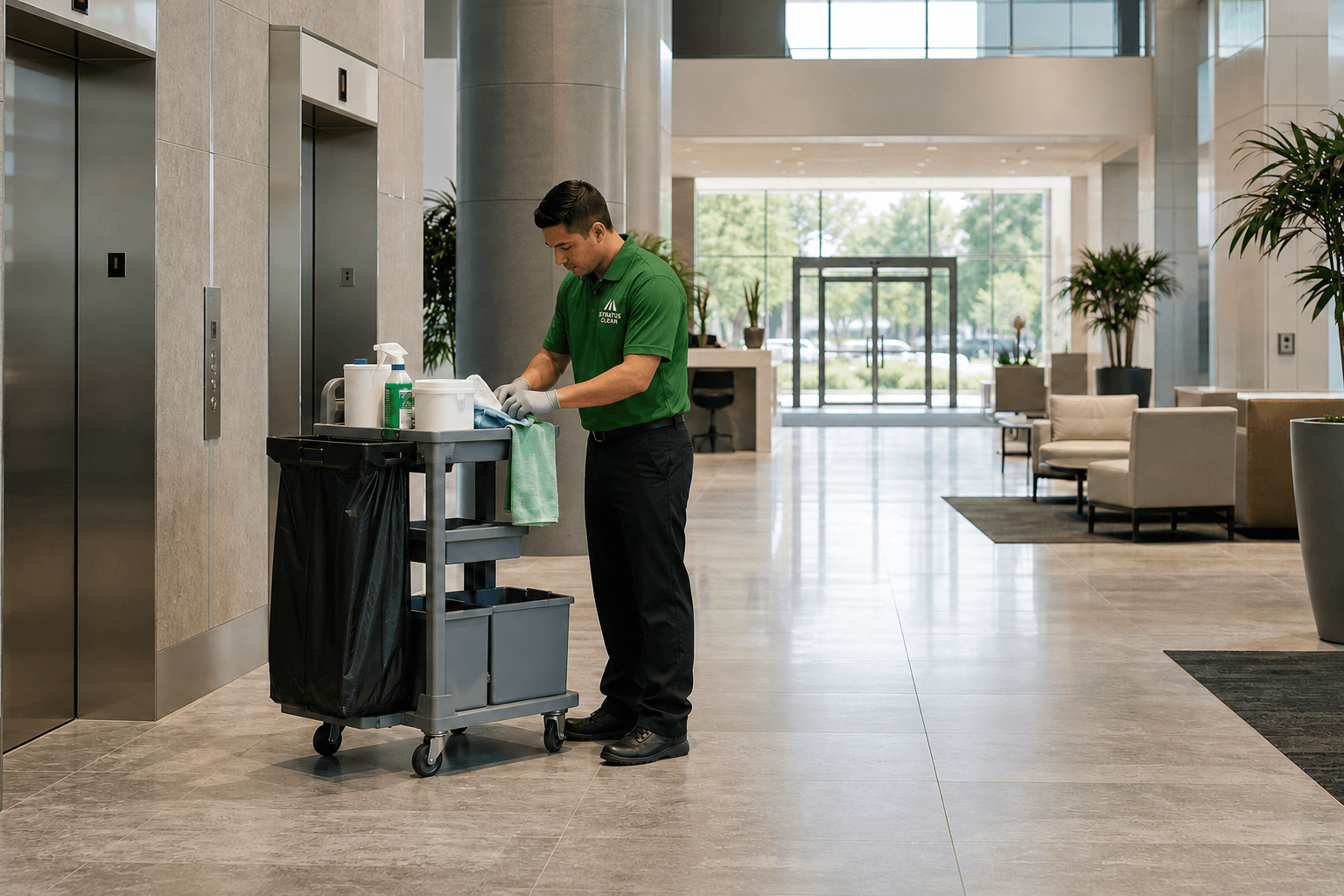
After-hours janitorial service works well for many facilities, but some buildings need support while business is happening. Day porter services fill that gap by keeping shared spaces clean, stocked, and ready during operating hours.
For high-traffic offices, schools, retail spaces, medical offices, gyms, dealerships, and commercial buildings, day porter service can make the difference between a clean start and a clean full day.
What does a day porter do?
A day porter handles visible cleaning and facility support tasks during the day. Common responsibilities include:
- Restroom checks and supply restocking
- Lobby and entrance upkeep
- Spill response
- Trash removal in common areas
- Breakroom touch-ups
- Conference room resets
- Interior glass and high-touch cleaning
- Light exterior or sidewalk attention
The role is flexible, which is why scope clarity matters before service begins.
Signs your facility needs day porter service
Day porter support is worth considering when restrooms run out of supplies, lobbies get messy before closing, staff lose time handling spills, or common areas need attention between scheduled cleanings.
It is also useful for facilities with events, shared amenities, public traffic, tenants, students, patients, customers, or seasonal visitor spikes.
Day porter plus nightly janitorial service
Day porter service does not have to replace nightly cleaning. Many buildings use both. The day porter keeps the facility presentable during business hours, while the janitorial crew handles deeper recurring tasks after the building is less active.
This combination works especially well for multi-tenant buildings, medical offices, schools, gyms, and retail properties.
Build the schedule around traffic
The best day porter plan matches the building's busy periods. Some facilities need morning and afternoon checks. Others need lunch-hour breakroom service, restroom attention during peak traffic, or event-based support.
Stratus Clean Palm Beach can help define day porter responsibilities, service windows, and escalation paths so the program supports operations without adding management burden.
Common day porter tasks
Day porter services work best when the task list is visible, specific, and tied to the building's busiest moments. A day porter may check restrooms, restock supplies, police lobbies, remove visible trash, wipe breakroom counters, clean entrance glass, respond to spills, refresh conference rooms, support event turnover, and communicate issues before they turn into complaints.
In high-traffic buildings, day porter work is less about deep cleaning and more about keeping the facility ready between scheduled janitorial visits. That distinction matters. Nightly janitorial teams may vacuum, mop, dust, clean restrooms, and handle routine maintenance after hours. A day porter protects the experience while the building is active.
Facilities that often need daytime cleaning support
Day porter service is useful for buildings where customers, tenants, patients, students, or employees move through the space all day. Common examples include:
- Multi-tenant office buildings
- Medical offices and outpatient centers
- Schools and educational facilities
- Retail centers and showrooms
- Gyms, studios, and fitness facilities
- Banks and financial offices
- Churches and event venues
- Property-managed commercial buildings
The more people use the restrooms, lobbies, elevators, entrances, and shared spaces, the more value a day porter can create.
How to size a day porter schedule
Not every facility needs a full-time porter. Some buildings only need a short morning reset, midday restroom checks, or support on peak traffic days. Others need continuous coverage because restrooms, entrances, breakrooms, or public areas turn over constantly.
A practical schedule starts with traffic windows. Identify when employees arrive, when customers visit, when lunch traffic peaks, when classes change, when appointments are busiest, and when building managers receive the most cleaning complaints. Then match day porter coverage to those windows instead of paying for hours that do not improve the building experience.
What to include in a day porter checklist
A useful checklist should separate recurring checks from response tasks. Recurring checks may include restrooms, trash, entrances, conference rooms, elevators, and breakrooms. Response tasks may include spills, supply shortages, event turnover, unexpected odors, weather-related tracking, or urgent touchpoint cleaning.
The checklist should also define what the day porter does not do during business hours. Heavy floor care, loud equipment, deep restroom detail, and disruptive cleaning may be better suited for after-hours janitorial service. Keeping the difference clear helps the facility stay presentable without interrupting the workday.
Why local day porter support matters
When a business looks for day porter service nearby, it is often trying to solve a problem happening during operating hours. That may be a lobby that looks messy by noon, restrooms that need attention between visits, or a building manager who is tired of calling staff away from their real work. Local support matters because the service has to fit the building's daily rhythm.
Stratus Clean Palm Beach can combine day porter services with recurring janitorial service, office cleaning, medical office cleaning, retail cleaning, school cleaning, and specialty cleaning for facilities across Palm Beach and surrounding service areas.